
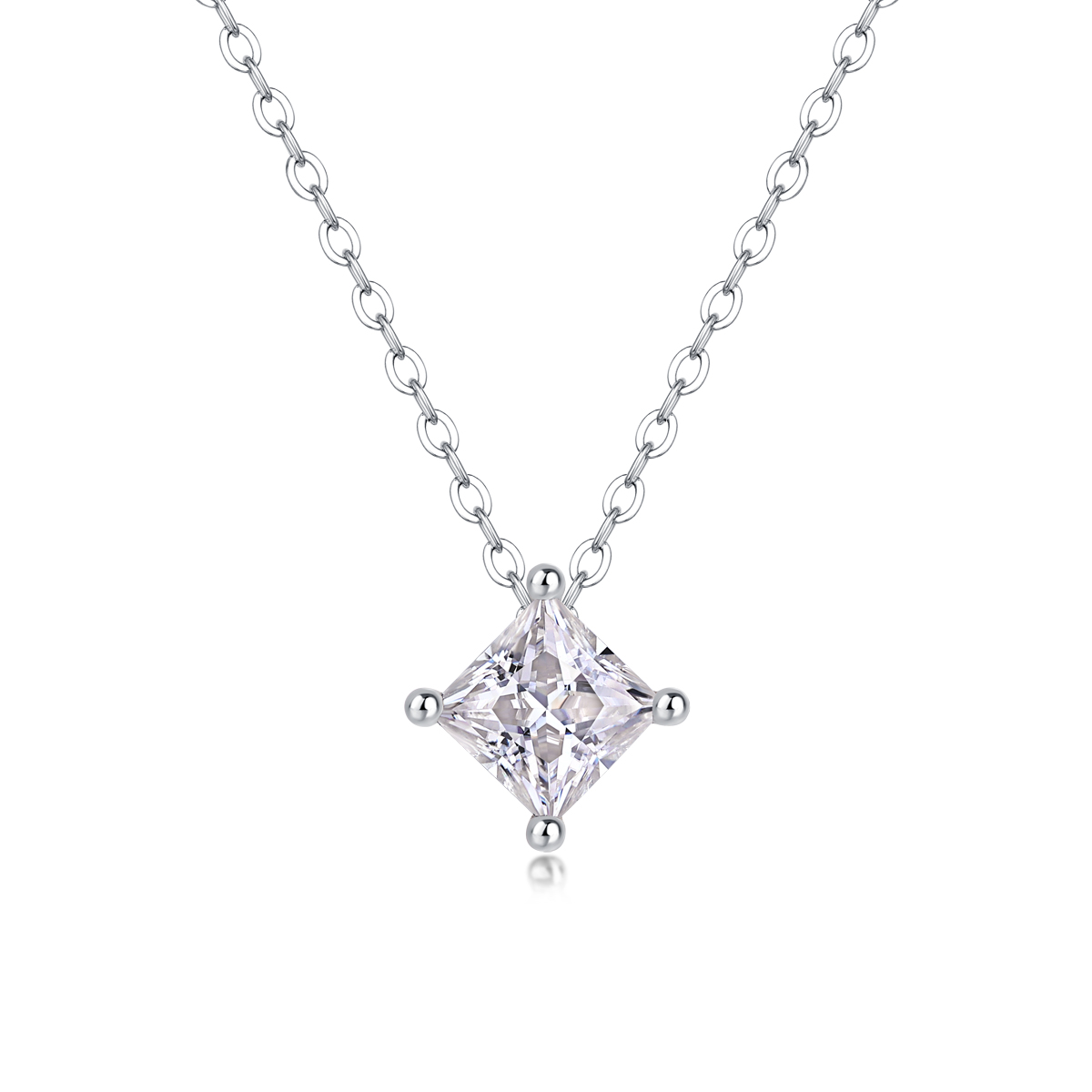
Start with a written specification, compare quotes on the same basis, and approve a physical sample before ordering stock. For 925 sterling silver moissanite necklaces, confirm the chain and pendant metals separately and include the finish, chain length, stone size, and packaging in the purchase order.
Contents
- Write one specification per SKU
- Request comparable quotations
- Approve samples for fit and finish
- Set up receiving checks and reorders
- Frequently asked questions
Write one specification per SKU
Give each design a SKU before asking suppliers for a price. For a pendant necklace, specify the stone shape, dimensions in millimeters, setting style, pendant dimensions, and the internal opening of the bail. If the customer will be able to remove the pendant, confirm that the chain end can pass through that opening. For a tennis necklace, specify the stone diameter or graduated size range, total finished length, clasp type, and whether you want a secondary safety catch.
State which components are 925 sterling silver, including the chain, pendant setting and clasp body where applicable. Ask the supplier to describe any component with a different material and to identify the coating separately. If you need a particular color across multiple designs, approve a reference finish and ask whether the supplier can match it on both the pendant and chain. A stock product photo rarely shows enough detail to approve color or texture.
Write chain length as a finished measurement and define the endpoints. For an adjustable design, specify the shortest usable length, the extender length, and whether the advertised figure includes the extender. Add a measuring photo to the specification so your supplier and receiving team use the same method. Use the 16 vs. 18 inch necklace guide to decide which lengths to sample for your assortment.
Request comparable quotations
Send the same specification to each supplier and ask for an itemized response. Request separate prices for samples, production, packaging, and any branding setup. Ask for minimums by design, length, and finish. A supplier may accept an overall order minimum while requiring a separate minimum for each plated finish. That distinction matters if you want to offer several lengths in a small opening order.
Confirm whether the quote includes the chain and whether the sample charge can be credited toward production. Ask when the lead time starts and whether it covers packaging and inspection. Write down who pays for shipping, where the shipment is handed over, and which taxes or other charges remain your responsibility. Compare the total cost to receive the same number of sellable units. Include an allowance for repairs or replacements only when you have a reasonable basis for estimating it.
Ask what happens if a batch fails an agreed check. Identify who supplies evidence, how quickly the supplier responds, and whether the resolution is replacement, rework, or credit. Put those terms in the purchase order or an accompanying agreement. Keep a copy of the final quote with the specification and approved sample photos.
Approve samples for fit and finish
Order a sample in the material and finish you intend to sell. Compare it against the written specification under consistent lighting. Measure the finished chain on a flat surface without pulling it taut. Check the extender and clasp by fastening the necklace at each usable length. For a pendant, confirm that it hangs facing forward and moves freely enough on the chain. For a tennis necklace, put it on a display form or try it on to see whether it lies the way you expect at the neckline.
Inspect the back of the pendant, the ends of the chain, and the inside of the clasp. Look for visible gaps at jump rings, plating color differences between components, and rough areas that could catch fabric. Compare stones in the same light and take photos of features that need to match from one batch to the next. Agree how the supplier will verify the silver alloy and identify the stone. Request supporting documentation if your buying or product labeling requirements call for it.
Record each decision and mark the approved sample with a date and SKU. If you request changes, ask for a revised sample when the change affects fit, construction, or appearance. Keep one approved sample accessible to the receiving team and make sure the supplier uses the same version as the production reference.
Set up receiving checks and reorders
Check the shipment against the packing list and separate it by SKU, length, and finish. Pull units from different cartons or inner packs so you see more than a single group of pieces. Verify the labels, finished measurements, and packaging before spending time on detailed checks. Compare the sampled pieces with the approved reference, operate the clasps, and examine stone security and visible finish under consistent lighting.
Agree in advance how many units will be checked and what happens when a defect is found. A clasp that does not close, a missing stone, or a wrong length may call for a different response from a slightly creased outer box. Set aside affected units, photograph the issue with the SKU and lot label, and follow the resolution procedure agreed with the supplier. Keep a record of which defects repeat so you can tighten the specification on later orders.
If you are starting with a small assortment, record actual sales and returns by length and design before expanding. Share the original SKU and finish reference when you reorder, and ask the supplier to disclose changes to the chain, clasp, or plating before production. Browse Cristiera’s necklace collection for design references you can identify by product link when requesting a quote.
Frequently asked questions
What belongs in a first wholesale inquiry?
Include the reference design, quantity by length and finish, requested metal and stone details, packaging needs, and destination. Ask for sample price, minimums, and lead time in the same reply.
Should I sample every length?
Sample lengths that change the fit, layout, or way the necklace hangs. For a simple pendant on the same chain, confirm the finished measurement and extender configuration for each length even if you sample only a subset.
Can I use a catalog sample as the production reference?
Yes, if the production run will use the same materials, components, and finish. Record any differences in writing and approve an updated sample when they affect performance or appearance.
What should the supplier provide for a reorder?
Request confirmation of the SKU, specification revision, available materials, price, and estimated ship date. Ask the supplier to flag substitutions before they are made.