
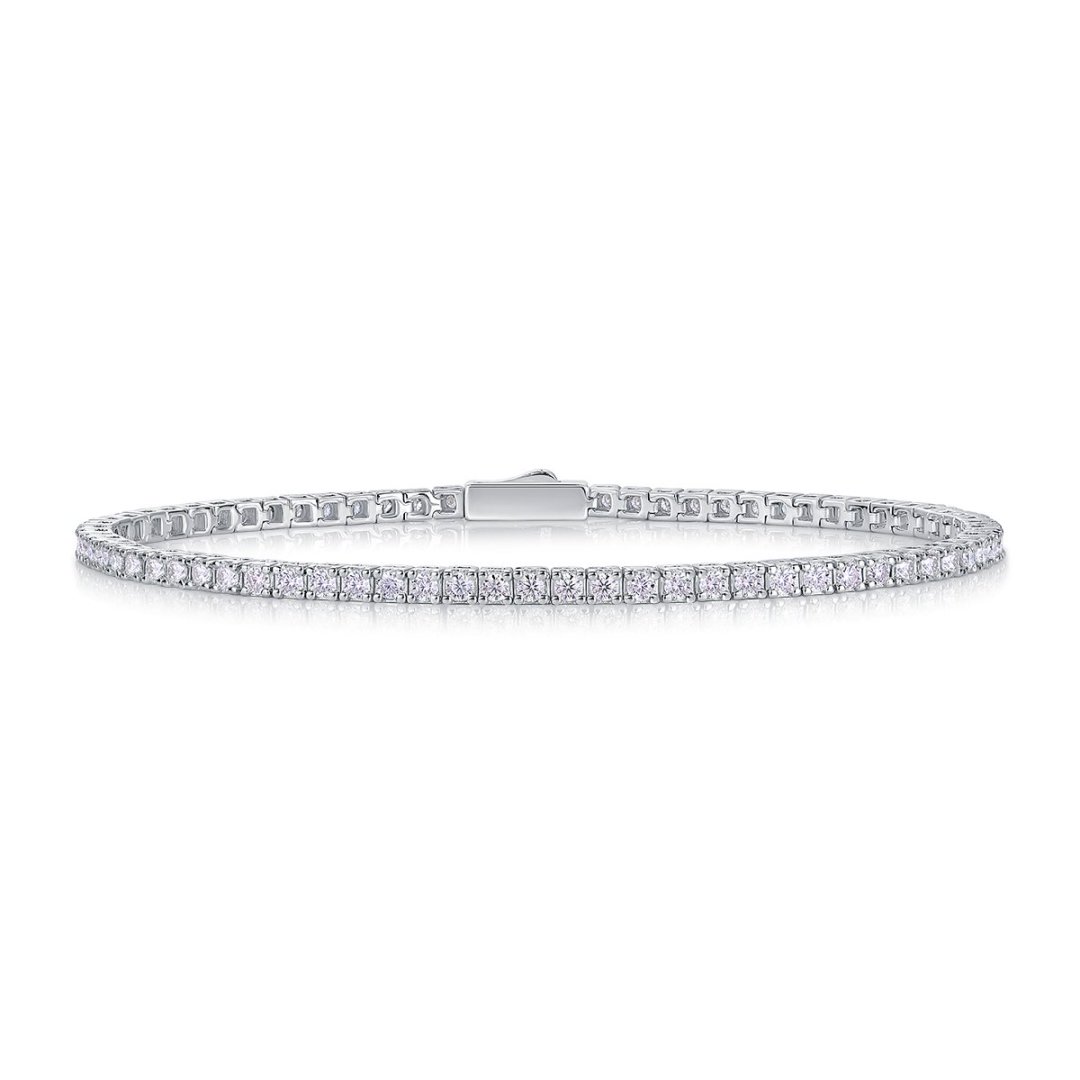
Choose sterling silver if you want a lower entry price or are testing a new style. Consider 14K gold if the wearer specifically wants a gold alloy throughout the bracelet and the price fits the budget. For either metal, check the clasp, settings, finish, and return terms before ordering.
Contents
- Read the metal description
- Compare price on equivalent designs
- Inspect the clasp and how the bracelet moves
- Plan care around the finish and setting
- Frequently asked questions
Read the metal description
Sterling silver is an alloy with 92.5% silver. A sterling silver tennis bracelet may be left with a silver finish or have a surface coating, such as rhodium or yellow gold. Ask the seller to identify both the base metal and the finish. The answer matters for care, repairs, and what the bracelet will look like after repeated wear.
A 14K gold bracelet uses a gold alloy containing about 58.3% gold. The rest of the alloy contributes to its color and working properties. Yellow, rose, and white 14K gold use different alloy mixes. Some white gold bracelets also have a rhodium finish, so ask whether the particular bracelet is plated if that affects your buying decision.
Read the full product description when a bracelet is described as “14K gold over sterling silver.” The gold refers to the coating and sterling silver is the base metal. Ask what the clasp and safety arms are made of if the listing only identifies the bracelet links. If the product page gives a single finish name, ask whether it applies to the whole bracelet or only to its visible surfaces.
Compare price on equivalent designs
Start with the same length and stone diameter. A narrow bracelet with small stones can have a different metal weight and construction from a wider piece with the same overall length. Two listings can also use different numbers of stones, different settings, or different clasp hardware. Comparing their prices without those details can make the metal appear responsible for a difference that also comes from construction.
Request the price for the finished bracelet, including the selected length and clasp. Ask what a length adjustment would cost and whether it affects the return policy. If you plan to give the bracelet as a gift, an exchangeable standard length can be more valuable than a custom fit on the first order.
Cristiera’s tennis bracelet collection offers examples of how settings and proportions vary between products. Use the tennis bracelet stone size guide to narrow the width first. Then compare metals using the same design and ask for a quote for the finish you want.
Inspect the clasp and how the bracelet moves
Lay the bracelet face up on a soft surface and look down the row of stones. Check that the settings sit at an even height and that no link visibly twists out of line. Pick up both ends and let the bracelet form a gentle curve. It should articulate through its links without an obvious stiff spot. Avoid deliberately bending it back on itself because the settings are designed for a limited range of motion.
Try opening and closing the clasp while supporting both ends. If it has a box clasp, check that the tongue seats fully and the release can be operated without pulling on the links. When safety arms are present, close each one and check that it stays in place during ordinary wrist movement. Inspect the skin-facing surfaces for rough edges. Check comfort with the bracelet alone before stacking it beside a watch or a rigid bangle.
For a distance purchase, ask for photos of the underside and a short video showing how the clasp opens and closes. A straight-on photo is useful for judging appearance, while a side view shows how high the settings sit. If the design is for regular wear, also check who handles clasp repair and whether the supplier stocks matching links.
Plan care around the finish and setting
Sterling silver can tarnish, and a plated finish can wear faster at contact points such as the underside and clasp. Storing the bracelet separately in a dry pouch helps limit rubbing. Check the seller’s care instructions before polishing, particularly when the bracelet is plated or has a textured finish. An abrasive cloth can affect a surface coating.
A gold bracelet also needs care around the moving parts. Residue can collect between links and around the clasp. After wearing the piece, wipe it gently with a soft cloth and check periodically for loose stones or a safety arm that has become easy to open. Put the bracelet away before activities that may snag it or strike the settings. If the clasp stops seating cleanly, set the bracelet aside until a jeweler can inspect it.
If you intend to replate, shorten, or repair the bracelet later, ask whether matching components are available. The feasibility depends on how the links are joined and where the stone settings begin. A quote for repair is most useful when it identifies the affected link, the original finish, and whether that finish can be matched.
For a gift, ask how the recipient plans to wear the bracelet. A loose bracelet that frequently strikes a desk or slides under a watch can show wear quickly, even when its metal is well suited to daily use. A closer fit may reduce movement, but it should still allow the clasp to sit comfortably. Compare the stated finished length with a bracelet the recipient already wears, measuring both end to end with the clasp open. Ask whether shortening the bracelet would remove a stone-set link and whether the shop can return spare links. Those details help you judge the total purchase cost and make future repairs easier to arrange.
Frequently asked questions
Does sterling silver change how moissanite sparkles?
The stone cut, size, and exposure to light affect the appearance. The metal color changes the frame around the stone and the overall contrast. Compare the designs under the same lighting if color is important.
Is white gold the same as rhodium-plated sterling silver?
They can look similar when new. Their base alloys are different, and both can have a rhodium surface finish. Ask the seller to specify the base alloy and the plating separately.
Which metal works better for a first purchase?
Sterling silver often makes it easier to try a style at a lower price. Compare the fit, clasp and repair options if you plan to wear the bracelet regularly. Choose the finish after seeing it next to the jewelry you already wear.
Can I tell the metal by looking at a product photo?
A photo can show color and finish but cannot reliably establish the alloy. Check the written specifications and ask the seller what metal is used for the links and clasp.