
Contents
- Prepare the inspection before opening cartons
- Select units and confirm their identity
- Measure the bracelet against the specification
- Inspect the settings, links and closure
- Record exceptions and decide whether to release the lot
- Frequently asked questions
Prepare the inspection before opening cartons
Use the purchase order, specification revision, approved sample and packing list as the references for inspecting a wholesale moissanite tennis bracelet shipment. Agree with the supplier on how you will select units, which measurements apply, and which defects require a hold. Start with quantity, identification and packaging, then check length and stone diameter, inspect settings, and operate the clasp. Record each result against the SKU and production lot so a supplier can act on it.
Set up a table with good lighting, a clean soft mat, a millimeter rule, an appropriate caliper, a loupe and a camera. Have a copy of the approved sample available. Keep it separate from the production pieces and record which revision it represents. Check that your ruler and caliper agree on a known reference before you measure production units. Use the same equipment and measurement method throughout the inspection so you can compare results across cartons and later shipments.
Prepare a sheet with the order number, carton and lot identifiers, SKU, finish, length, quantities checked, observed measurements, photos and proposed disposition. Include a column for the specification revision. If a supplier sends a revised packing list, save it with the original purchase order so you can reconcile what changed. A unit found in the wrong carton may indicate a packing error, and a repeat mismatch across cartons may mean the entire shipment needs recounting.
Select units and confirm their identity
Start with a count of cartons and inner packs. Compare the outer labels with the packing list, photograph any visible damage, and record which cartons contain each lot. Separate pieces by design, finish, size and lot before opening individual bags. If the packaging code differs from the purchase order, hold that group for identification before adding it to sellable inventory. Keep intact packaging from any unit you photograph so the supplier can trace the same lot.
Follow the sample size and acceptance rules agreed with the supplier. Pull units from more than one carton and from different positions inside the cartons. If several lengths or finishes share a shipment, include each relevant SKU in the selection. Record how the units were chosen. A convenience sample from the top of one box can miss a defect concentrated in another carton or a labeling error affecting a single length.
When checking multiple lots, keep the results separate. Record the number inspected and the number of affected units for each lot. If one bracelet has both a wrong label and a clasp problem, count it as one affected unit and list both observations. That lets the supplier understand the number of pieces affected and the types of rework involved. When the agreement specifies how to expand the check after a defect, follow that procedure and document which extra units were selected.
Measure the bracelet against the specification
| Check | Method | Record |
|---|---|---|
| Finished length | Lay flat with the clasp in the agreed position and measure between the agreed endpoints | Actual millimeters, target and permitted variation |
| Stone diameter or finished width | Measure the feature named in the specification at the agreed location | Feature measured, actual millimeters and position |
| Clasp operation | Close and release the primary clasp and any separate safety catches | Pass, observation, or hold with photo or video reference |
| Settings and finish | Inspect under consistent light and compare with the approved sample | Location and type of any visible difference |
Measure the finished bracelet without pulling it taut. Use the same clasp position and endpoints shown on the approved specification. If the specification gives a length in inches and your sheet uses millimeters, record the original value and how you converted it. Apply only the tolerance agreed for that order. If there is no agreed tolerance or the endpoint is unclear, record the actual measurement and ask the supplier to confirm the interpretation before treating the lot as accepted.
Stone diameter and finished bracelet width are different measurements. The mounting can project beyond the stone, and prongs can make the apparent width vary by orientation. Check the named feature in the specification and record where you measured. Avoid forcing caliper jaws between prongs or touching the stone with enough pressure to move it. If the finished piece prevents a reliable reading of the stone itself, compare the unit with the reference sample and request the supplier’s stone-size records for that batch. Do not substitute the width of the setting as the stone diameter.
For a borderline result, repeat the measurement with the bracelet reset on the mat. Ask another inspector to measure the same unit using the same endpoints if the readings disagree. Photograph the position of the ruler when the discrepancy would affect acceptance. This is more useful to the supplier than a photograph showing only a number on the measuring tool.
Inspect the settings, links and closure
Lay the bracelet face up and look down the stone row. Note conspicuously raised or rotated stones, settings that lean out of line, bent metal, missing stones and gaps that differ from the reference. Turn the bracelet over and check the back of the settings and the joints. Where you suspect movement, set the unit aside for a qualified inspection. Pulling or levering a stone during receiving can create damage and make it difficult to determine the original condition.
Check the links beside the clasp and the end connections before you operate it. On a box clasp, support both ends, align the tongue and see whether it seats fully. Operate the release and any safety catches separately. A click by itself cannot establish that the primary mechanism is holding. Use a light check appropriate to the approved inspection method and keep both ends over a soft surface. On a lobster clasp, observe whether the gate returns and closes fully, and check the connecting ring for an opening.
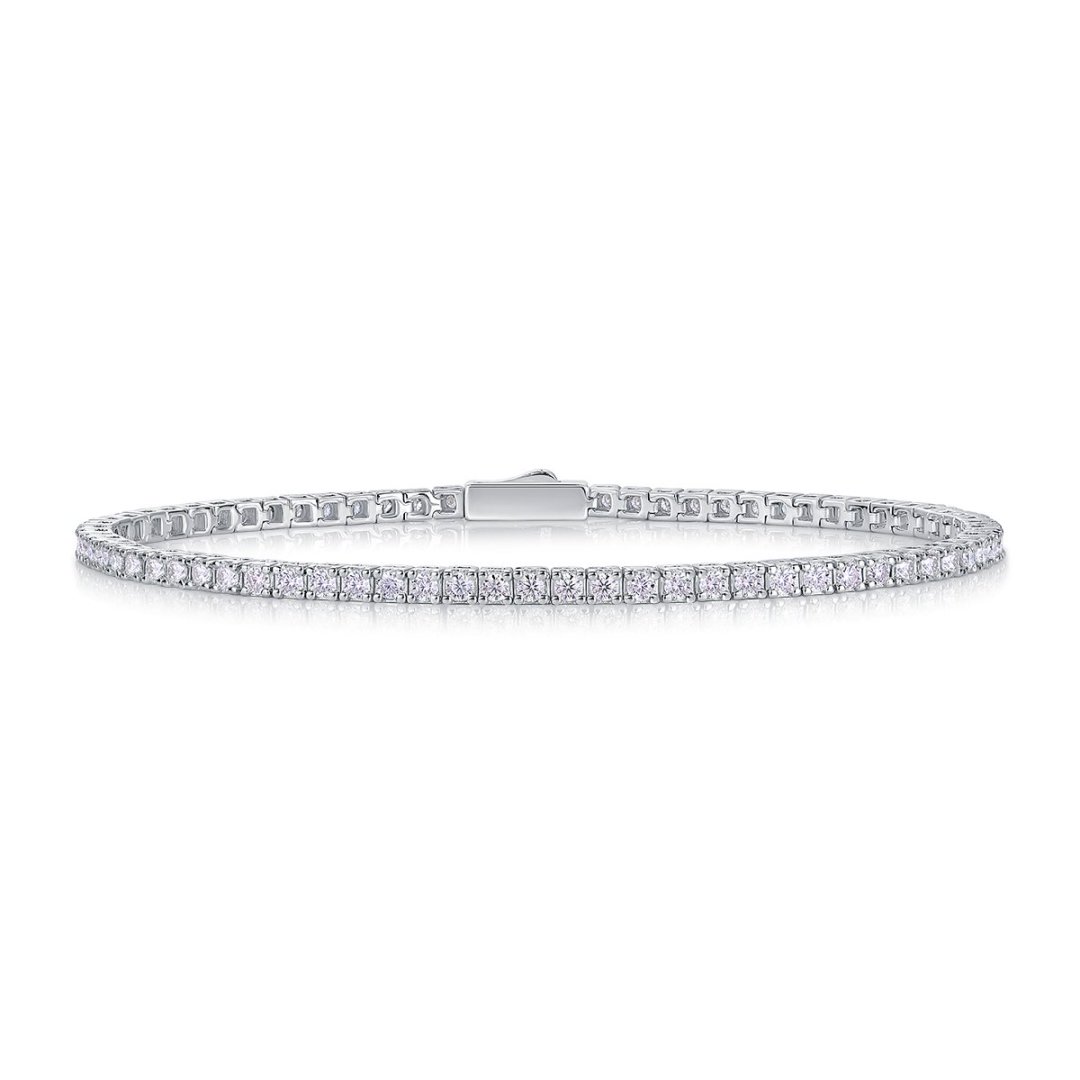
Let the bracelet curve naturally on the mat and compare its movement with the approved sample. A stiff section can indicate a link or setting that has shifted. Do not bend the bracelet beyond the curvature it would normally take. Check for roughness using the inspection method agreed with the supplier. If a closure opens without its release being operated, or a link looks open, identify and hold that unit. The tennis bracelet clasp guide illustrates the different locations where looseness can occur.
Compare the color and finish in the same light and orientation. Pay particular attention to the ends and to any replacement-looking links that differ from the rest of the bracelet. If a finish difference appears only at one angle, photograph both the reference and the production unit together. The observation can still be relevant, but the shared lighting makes the evidence easier to assess.
Record exceptions and decide whether to release the lot
Group observations by lot and issue type. Use the acceptance terms in your order to decide which pieces or lots can be released, which need additional inspection and which should be held. A damaged retail box and a failed closure have different consequences. Apply the severity definitions agreed with the supplier and document any issue the agreement does not cover. Keep held units separated from inventory while you resolve the discrepancy.
Send a concise report with the order number, SKU, lot, number inspected, number affected, and a photo or video for each representative issue. For a length discrepancy, include the agreed endpoints and the measured result. For a clasp problem, show the clasp from the side and record whether the problem involves the main closure, a safety catch or a neighboring link. Ask for a written disposition such as replacement, rework, credit or a broader inspection, and note who will cover the related costs under the order terms.
Retain one copy of the final report with the approved sample record. If you reorder, use repeated defects to improve the specification. For example, if two sizes were packed under the same label, require the finished length on the individual unit label. If the receiving team repeatedly measures a different width from the supplier, add a dimensioned photo to the specification. Review the Cristiera tennis bracelet collection when selecting reference designs, and identify the actual model and finish in every specification you send.
If some units are released while others remain on hold, record the exact quantity moved into inventory and the location of the held pieces. Update the receiving record after the supplier issues a credit, ships replacements or returns reworked units. Recheck replacements against the same specification and link their results to the original report. This keeps the purchasing team from closing a complaint while the affected stock is still unresolved.
For example, suppose the shipment contains two lengths of the same finish. During receiving, three bracelets from one carton have a label for the longer length but measure close to the approved shorter sample. Photograph each bracelet beside its label, measure using the specification’s endpoints, and record the carton and lot numbers. Hold the group until you know whether the pieces were mislabeled or produced to the wrong length. Ask the supplier whether the cartons can be traced to the same packing batch and whether additional units should be measured. If the pieces meet the shorter SKU requirements, agree on any relabeling in writing before adding them to inventory. Keep the new count by length with the original discrepancy report so the purchase order, stock records and supplier credit can be reconciled.
Frequently asked questions
Should I inspect every bracelet?
Use the inspection plan agreed with your supplier. A small first order may make a full count and function check practical. Larger orders can use a documented sample plan, with a procedure for expanding the inspection after a repeated defect.
Can I accept a different clasp if it works?
Compare it with the approved specification and record the change. A different clasp may change the bracelet’s fit, thickness and service options. Ask the supplier to document the substitution and obtain approval before releasing affected stock.
Can a visual check confirm the stone identity or alloy?
Appearance helps assess consistency. Use the verification method and documentation agreed for the order when you need to confirm the stone identity or alloy.
What should I do if I cannot reproduce a reported clasp problem?
Record the original report, check the unit against the approved sample and document the conditions of your inspection. If the issue could affect normal wear, hold the unit and request a closer evaluation before selling it.