
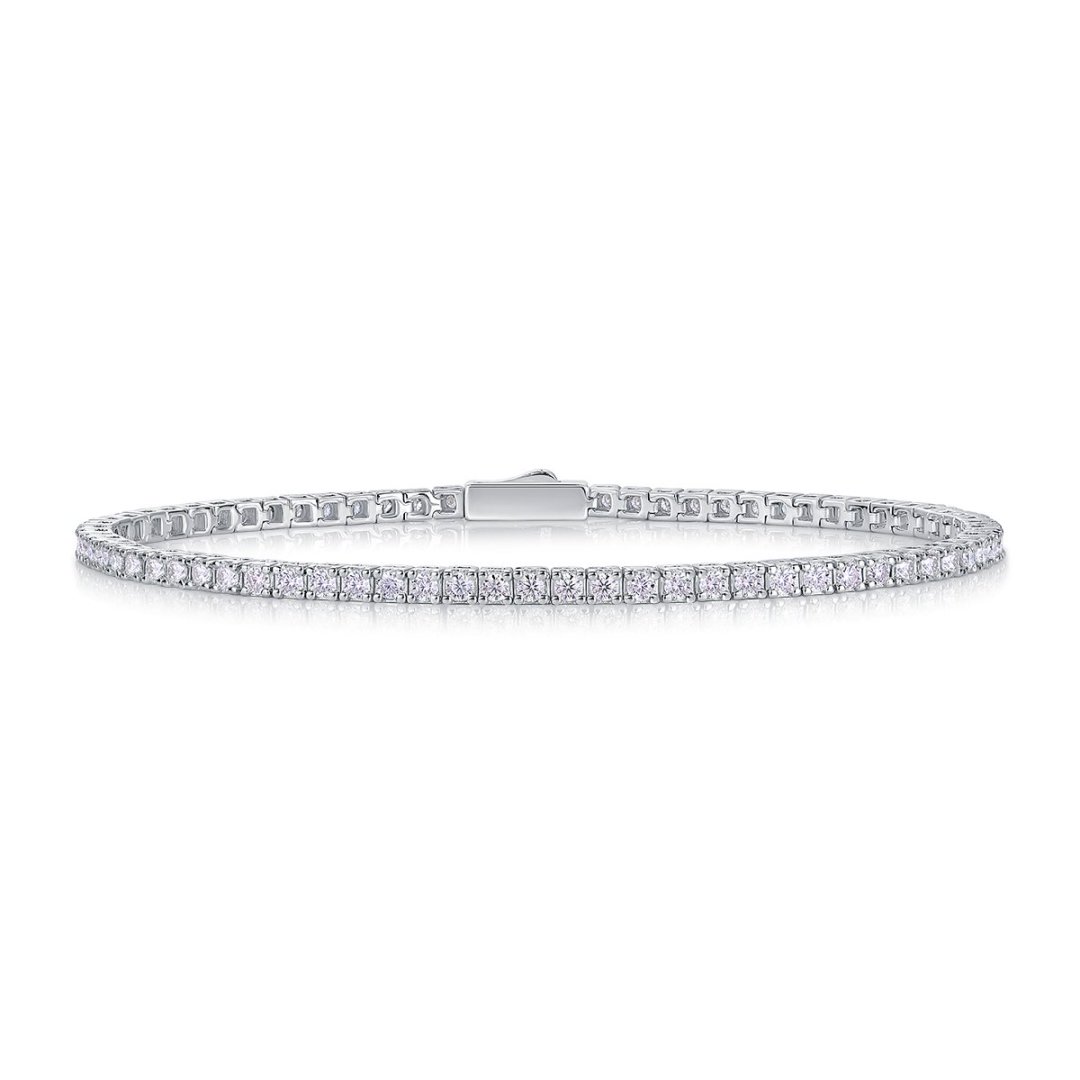
If your tennis bracelet clasp opens during normal wear or a safety arm no longer stays closed, take the bracelet off and inspect it over a soft surface. Check the main closure, its safety catch, and the links beside it. Keep the bracelet off your wrist until the closure holds securely.
Contents
- Stop wearing it and check the closure
- Find out which part is moving
- Decide whether cleaning or repair is appropriate
- What to ask a jeweler or supplier
- Frequently asked questions
Stop wearing it and check the closure
Take the bracelet off over a table or a soft cloth as soon as the clasp starts opening on its own. Put it in a pouch until you know which part is failing. A safety arm may catch an open clasp briefly, but it cannot reliably hold a bracelet through repeated movement. If the clasp is difficult to remove without pulling, support both sides and ask a jeweler for help if necessary.
Put the bracelet face up on a clean surface with good lighting. Before closing it, check the links beside the clasp and look for an opening, a bent connector, or a link that sits at an unusual angle. A bracelet can feel loose because its fit is generous, because the clasp fails to hold, or because the connection between the clasp and the bracelet has developed movement. Those problems call for different repairs.
If the bracelet was recently delivered, take a photo of the clasp and save the order details. A short video of the problem can help a seller tell whether a part is missing, whether the clasp is failing to seat, or whether the return instructions call for leaving the bracelet as received.
Find out which part is moving
On a box clasp, a narrow tongue slides into a housing. Some designs also have one or two hinged safety arms. Support the housing and align the tongue before closing it gently. Watch whether the tongue sits fully in the housing and whether it withdraws without the release being pressed. A click is a clue that the mechanism engaged. The closure still needs to stay seated with a light check while both ends are supported.
If the main closure holds but a safety arm lifts away easily, look at whether the arm lines up with its catch. It may be bent, or the catch itself may have worn. If the tongue holds securely and the whole clasp still rocks relative to the next link, inspect that connection instead. Some movement is part of the bracelet’s design, so look for a gap or compare the two sides for a visible difference.
For a lobster clasp, look at whether the lever springs back and the gate closes fully against the clasp body. Check the ring it attaches to for a gap. A gate that stays partly open or a distorted end ring can let the bracelet slip free. Use a phone camera to inspect hard-to-see areas. Avoid testing the clasp by hanging weight from it or pulling hard on the stone-set links.
Decide whether cleaning or repair is appropriate
Lint, lotion, and other residue can collect near a closure. If you see loose debris, gently wipe the outside with a soft, dry cloth and check the mechanism again. Follow the care instructions for the metal and finish before using any liquid. If the tongue, spring, hinge, or connector is visibly damaged, plan on repair. The general moissanite jewelry cleaning guide covers cleaning the rest of the piece.
Avoid bending the tongue or safety arms with pliers. The amount of adjustment depends on the clasp design, and bending a thin component can change how it engages, mark the finish, or make the part harder to repair. Avoid glue, oil, and adhesive tape around the moving parts. A repairer needs to be able to inspect the original surfaces and see how the mechanism engages.
If the clasp passes a gentle check but the bracelet constantly slides over the base of the hand, ask about length adjustment. If the clasp opens independently of the fit, address the closure first. A jeweler can advise whether both jobs can be done together and whether shortening will affect the symmetry of the stone row.
What to ask a jeweler or supplier
Bring the entire bracelet, any detached part, the metal and finish details, and your description of the failure. Explain when it happens. For example, the box clasp may release during ordinary wrist movement, or one safety arm may lift whenever the bracelet catches on a sleeve. This helps the repairer reproduce the issue without forcing the jewelry.
Ask whether the existing clasp can be adjusted or whether it needs replacement. Request an inspection of the adjacent links and stones, especially if the bracelet was dropped or snagged. For a plated bracelet, ask whether the finish around the repair can be matched. If the clasp is to be replaced, confirm the replacement’s width, profile, and color alongside the bracelet. A taller clasp may feel different against a desk or when worn with a watch.
When collecting the bracelet, open and close it several times over the counter. Check that the primary closure engages and that any safety arms close independently. Ask the jeweler to show you the release action. If you are comparing designs for a future purchase, the Cristiera tennis bracelet collection provides examples of different bracelet widths and settings. Check the individual listing or ask the seller for a clasp photo before ordering.
Frequently asked questions
Can I wear the bracelet if only one safety arm is loose?
Set it aside until the closure is checked. The remaining arm may offer backup, but the assembly should work as designed before you wear it again.
Why does the clasp click but still open?
A click can happen even if the tongue does not seat securely. A worn catch, poor alignment, or an issue in a neighboring link can also make the bracelet open. Ask the repairer to examine the complete assembly.
Does a loose clasp mean the bracelet is too big?
A large bracelet may move more on the wrist. A clasp that releases during normal wear has a closure problem that should be checked separately from the fit.
Should I contact the seller before getting it repaired?
Yes, particularly for a recent purchase. Send the seller a photo or video and ask about its repair or exchange process before authorizing work elsewhere.