
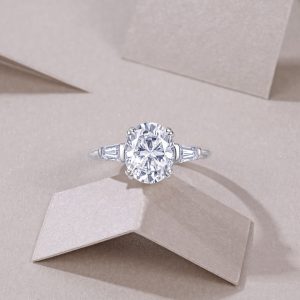
Measure the inside diameter of a ring that fits the intended finger, or measure the finger’s circumference with a strip of paper. Record the result in millimeters and compare it with the product’s size chart. Check the fit again before ordering if you are between sizes, buying a wide band, or choosing a setting that is difficult to resize.
Contents
- Measure a ring you already own
- Measure your finger with a paper strip
- Account for band width and daily changes
- Check the size before ordering
- Frequently asked questions
Measure a ring you already own
Find a ring that fits the exact finger and hand you are shopping for. The same finger on the other hand can be a different size, and a ring you wear on your middle finger gives you little information about how a band will fit your ring finger. For the best comparison, pick an everyday band with a width and interior profile close to the new design.
Set the ring on a flat surface and lay a millimeter ruler across its widest interior opening. Read from inside edge to inside edge through the center. The outside diameter includes the metal and will make the size look larger. If you use a caliper, open its inside jaws gently until they touch the interior. Measure again after rotating the ring. A visibly oval or bent band is a poor reference because its measurements vary by direction.
Compare the diameter with the chart for the ring you plan to order. For example, the Cristiera engagement ring size chart lists a 16.6 mm interior diameter for US size 6, 17.3 mm for size 7, and 18.0 mm for size 8. Keep the original measurement when asking for help so the seller can check it against the specific design.
Measure your finger with a paper strip
Cut a narrow strip of plain paper and wrap it around the base of your finger. The paper should sit against the skin without indenting it. Mark the exact point where the ends overlap. Unwrap it, lay it flat, and measure from the end to the mark in millimeters. That number is the circumference. Use the circumference column of the size chart. A paper strip is easier to mark and generally stretches less than thread.
Measure twice and start over if the readings disagree. Try moving the marked loop over your knuckle. If the loop passes the finger base but catches at the knuckle, measure the knuckle separately and keep both numbers. A ring needs enough clearance to go over the joint and enough grip to stay oriented once it is seated. A heavy center stone makes a loose fit more noticeable because it can turn under your finger.
A printable sizing guide can help if its scale is accurate. Print at actual size and check its calibration line with a physical ruler before placing a ring on the chart. Printing with a fit-to-page setting can shift every size on the sheet. A physical sizing set gives a better feel for how much resistance you need at the knuckle.
Account for band width and daily changes
Check the fit when your hands feel normal. Fingers can feel tighter in warm weather or after exercise and looser when cold. Repeat the measurement at a second time of day if the first reading falls near a size boundary. Use a routine day as your reference if you will wear the ring daily. Stop if a test ring feels painful or leaves a deep indentation.
A wide band covers more of the finger and may feel tighter than a narrow one of the same nominal size. A rounded interior can also feel different from a flat interior. Ask for a sizing sample or try a comparable width before choosing a size for a wide band. If you plan to stack an engagement ring with a wedding band, try the two widths together. A ring that is comfortable by itself may feel snug in the stack.
Between two sizes, compare how the two bands behave over the knuckle and at the base. The larger size can make sense when the smaller catches or feels tight. When the larger ring rotates easily, a half size or a different interior profile may give a better fit. Take both measurements to a jeweler when the difference between knuckle and base is substantial.
Check the size before ordering
Write down the finger and hand, the measurement in millimeters, the size system, and the width of the ring you used to check the fit. US and international sizing systems use different labels, so confirm the system in the product listing before ordering. If you have a diameter but the seller wants circumference, multiply the diameter by π as a cross-check. For instance, a round band with a 17.3 mm interior diameter has a circumference of about 54.4 mm. Published charts can round the values differently, so compare measurements using the seller’s own chart.
When ordering a surprise gift, borrow a ring the recipient already wears on the intended finger if possible. Record the diameter and check the seller’s exchange terms before buying. For an engraved band, a full eternity setting, or a custom design, ask about resizing options in advance. Stones around the band and decorative patterns may limit what a jeweler can adjust. If you have only an estimate and the design has limited resizing options, an in-person sizing or a sample band is worth arranging before production.
Frequently asked questions
Can I use a phone app to measure ring size?
An app can provide a rough estimate if you can calibrate its on-screen scale and place an existing ring flat against it. Verify the result with a millimeter ruler or physical sizer before ordering a piece that is difficult to exchange.
Should I measure the ring or the finger?
Measure an existing ring when it fits the same finger and resembles the band you are buying. Measure the finger when you have no reliable reference. If both methods give different results, check that you are comparing the right chart columns and try a physical sizer in the intended width.
Can I use a ring size from another brand?
Use it as a starting point. Confirm the size system and compare the inner dimensions. The feel can change with the width, the interior profile, and how much the ring weighs.
How tight should the ring feel?
It should move over the knuckle with gentle resistance and sit comfortably at the base. Check that you can remove it without forcing it. If the setting turns repeatedly during normal movement, compare another size or ask a jeweler about fit options.