
Contents
- How each setting holds the stone
- Compare the setting parameters
- Understand what changes visually
- Evaluate everyday wear and service
- Use the same checklist for both rings
- Frequently asked questions
How each setting holds the stone
A prong setting holds a moissanite with individual metal tips that extend over the edge of the stone at several points. A bezel surrounds all or part of the stone with a rim that overlaps its edge. Both depend on a seat that supports the stone below that edge and on accurately fitted metal above it. When comparing rings, examine the actual profile of the setting, the seat and contact points, and the amount of exposed stone around the perimeter.
The edge is often called the girdle. In a round brilliant, it is the boundary between the crown and pavilion. The crown is the part above the girdle, and the pavilion tapers beneath it. The setting should locate that boundary consistently so the stone does not rock and does not sit at an unintended angle. On a prong ring, look for tips that meet the stone neatly without a gap. On a bezel ring, look for an even rim that follows the intended outline. A lopsided design or visible gap merits a closer inspection.
A full bezel typically frames the entire perimeter. A partial bezel covers selected portions and leaves other sections exposed. A low basket with short prongs can sit close to the finger. A bezel can also sit on a tall mounting. The construction determines how high the stone sits, how a wedding band fits beside it, and whether the ring catches on fabric. Request a side view before drawing conclusions from the setting name.
Compare the setting parameters
| Parameter | Prong setting | Bezel setting |
|---|---|---|
| Contact around the edge | Individual tips at selected points | Continuous or partial rim |
| Outline from above | Stone edge visible between tips | Metal border visible around the covered edge |
| Profile height | Depends on basket, stone depth and band | Depends on mounting, stone depth and band |
| Inspection points | Check tips, seats and adjacent supports | Check rim, seat and continuity around the stone |
For two rings with the same stone dimensions, compare the finished head width in millimeters and the overall profile height. A bezel rim adds a visible frame, and prongs may extend past the stone in selected directions. Which ring occupies more space depends on the thickness of the rim, the number and orientation of the prongs, and the design of the gallery beneath the stone. The gallery is the structure below the stone that connects the setting to the ring. Ask where the measurement starts and ends so the figures are comparable.
If the center stone has a pointed outline, look at which parts of the design cover the points. A prong design may use a V-shaped tip over a point, while a full bezel can surround it. A partial bezel might leave a point exposed. On elongated shapes, check both ends and each long side. A single overhead photo may hide the exact coverage at the narrow tip. Request an angled close-up if that feature matters to you.
If you plan to wear another band next to the ring, ask for a profile photograph with a straight band placed against the mounting. The relevant dimensions are the width where the two rings meet and the available space under any overhang. Two mountings of the same overall height can stack differently because their shoulders and galleries occupy different areas.
Understand what changes visually
From above, a bezel gives the stone an outline that is visibly part of the ring. A thin rim creates a narrow border and a broad rim is a stronger design element. A prong setting preserves more interruptions between metal contact points, letting you see individual sections of the stone edge. The effect depends on the stone shape and on how well the tips are integrated into the design. Four prominent prongs can produce a different outline from six small prongs arranged around a round stone.
When judging sparkle, compare photographs or videos under similar conditions. Cut, facet alignment, viewing angle and lighting all affect the way moissanite looks. The metal around the edge and below the stone changes what you can see from the side. An open mounting exposes more of the pavilion to view. In a bezel with an open underside, you may still be able to see and clean part of the pavilion even though the girdle is covered from above. The precise optical appearance is best judged from the actual ring in the light where you plan to wear it.
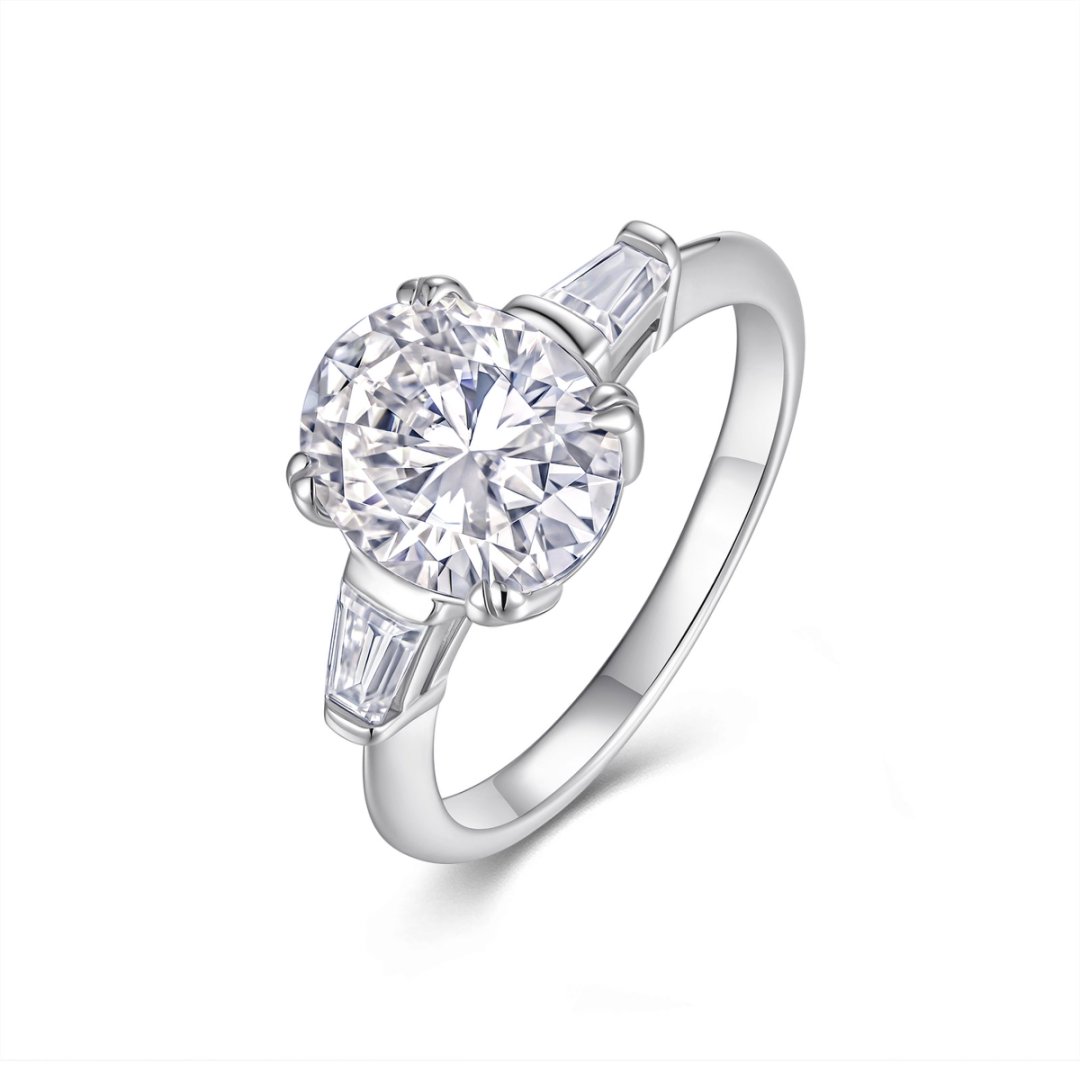
For an online comparison, ask for both candidates on the same background under diffuse light and then under a directional light. Compare them at a similar camera distance without filters. Look at the ring at ordinary hand distance as well as close up. An image that fills the screen can make tiny changes to the metal outline appear more prominent than they are on the hand. Use the Cristiera moissanite engagement ring product page as an example of how to read a ring listing alongside its imagery, and request the actual dimensions for the setting you are considering.
Evaluate everyday wear and service
For a ring that regularly meets sleeves or gloves, run your attention along the top edges and inspect any places where fabric can catch. A well-finished bezel can present a smooth perimeter. Rounded prong tips can also sit close to the stone. Look at the junction between the head and the shoulders, where a protruding feature can catch even if the stone edge itself is covered. The actual shape and finish matter as much as the style label.
Routine inspection differs by setting. For prongs, have a jeweler check whether any tip is raised, worn or displaced, and whether its seat still makes proper contact. For a bezel, look for deformation, a visible change in the rim, or movement of the stone. A ring that has received a blow deserves an inspection even if the top looks normal. Supporting elements under the stone can bend without leaving an obvious mark from above. Avoid trying to press a tip or rim down at home.
Cleaning access depends on the opening below the stone and the shape of the surrounding metal. A gallery with accessible spaces makes it easier to reach visible residue, provided the seller approves the cleaning method for the alloy and finish. A deeper recess can collect lotion near the stone. Ask the jeweler to show you which surfaces you can safely reach. If the stone moves or the setting appears distorted, have the ring checked before cleaning it.
When asking about repair, describe the metal, finish, and location of the damage. A jeweler may be able to repair or replace a damaged prong on some designs. A deformed rim may require other work depending on its thickness and how it was made. Stone removal, refinishing and replating can change the cost and availability of repair. Get an assessment of the specific mounting, especially when it incorporates other stones around the center.
Use the same checklist for both rings
First compare the stone dimensions, including length and width for an elongated shape, so that the setting is the main difference you are evaluating. Ask for a side view, top view, and a view from underneath. The top view shows coverage around the stone edge. The side view shows the height and support. The underside helps you see where the stone is accessible and how the head joins the band.
Next compare the design against the way you expect to wear it. Someone who wears gloves frequently may prioritize a smooth perimeter and a low profile. Someone matching the ring with a straight wedding band may put more weight on clearance under the head. A buyer who likes a sharply defined metal outline might prefer the look of a bezel even if a prong ring offers similar clearance. Compare two rings on the criteria most relevant to the wearer and ask the seller to identify any trade-offs in the actual designs.
Finally, ask for the inspection and repair options available for the setting you select. If you are ordering a custom design, ask how the exact stone dimensions and profile will be reflected in the finished mounting. Request a drawing or images of a comparable piece and mark any areas where you want more or less metal coverage. Keep the approved dimensions and finish with the order record so that future service can refer to the design originally requested.
For a customer comparing samples in a showroom, record the final ring size and check whether that changes how the center setting sits on the hand. A stone can appear to project farther when the ring rotates loosely. Examine the ring when it is centered and again after moving your hand normally. Compare the width of the shoulders and their transition into the head. These details are relevant for both settings, particularly when the finished ring includes side stones or a band that tapers near the center.
For a purchase where comfort is the priority, also record the width and interior profile of the band. A heavier head on a narrow band may make rotation easier to notice, and a band that fits securely can keep either setting aligned. Try a ring with comparable width on the intended finger before ordering. Ask the seller to identify which measurements apply to the finished size you need. This is particularly useful for custom rings where a showroom sample may have a different band thickness or shoulder shape from the final design.
Frequently asked questions
Does a bezel always sit lower?
The profile depends on the gallery, stone depth and mounting. Compare the measured height of the two rings and confirm how it was taken. A side view next to a straight band is helpful if stacking matters.
Which setting protects pointed corners?
Look at how the specific mounting covers the corners. A V-shaped prong can cover a point, and a bezel can cover a point when the rim follows the outline. A partial bezel can leave some corners exposed.
How can I tell if the stone is loose?
If you see movement, hear an unusual rattle or notice a new gap, set the ring aside and ask a jeweler to inspect it. Avoid trying to reproduce the movement by twisting the stone.
Can I change a prong ring to a bezel later?
Ask a jeweler to evaluate the mounting and stone. Depending on the design, the change may require a different head or a new mounting. Ask how the work could affect side stones, the finish, and the way a matching band fits.