
Contents
- Start with the silhouette
- Compare the measurements that matter
- Pick a style for your daily routine
- Try the fit before you plan a stack
- Shop for a gift or compare two quotes
- Frequently asked questions
Start with the silhouette
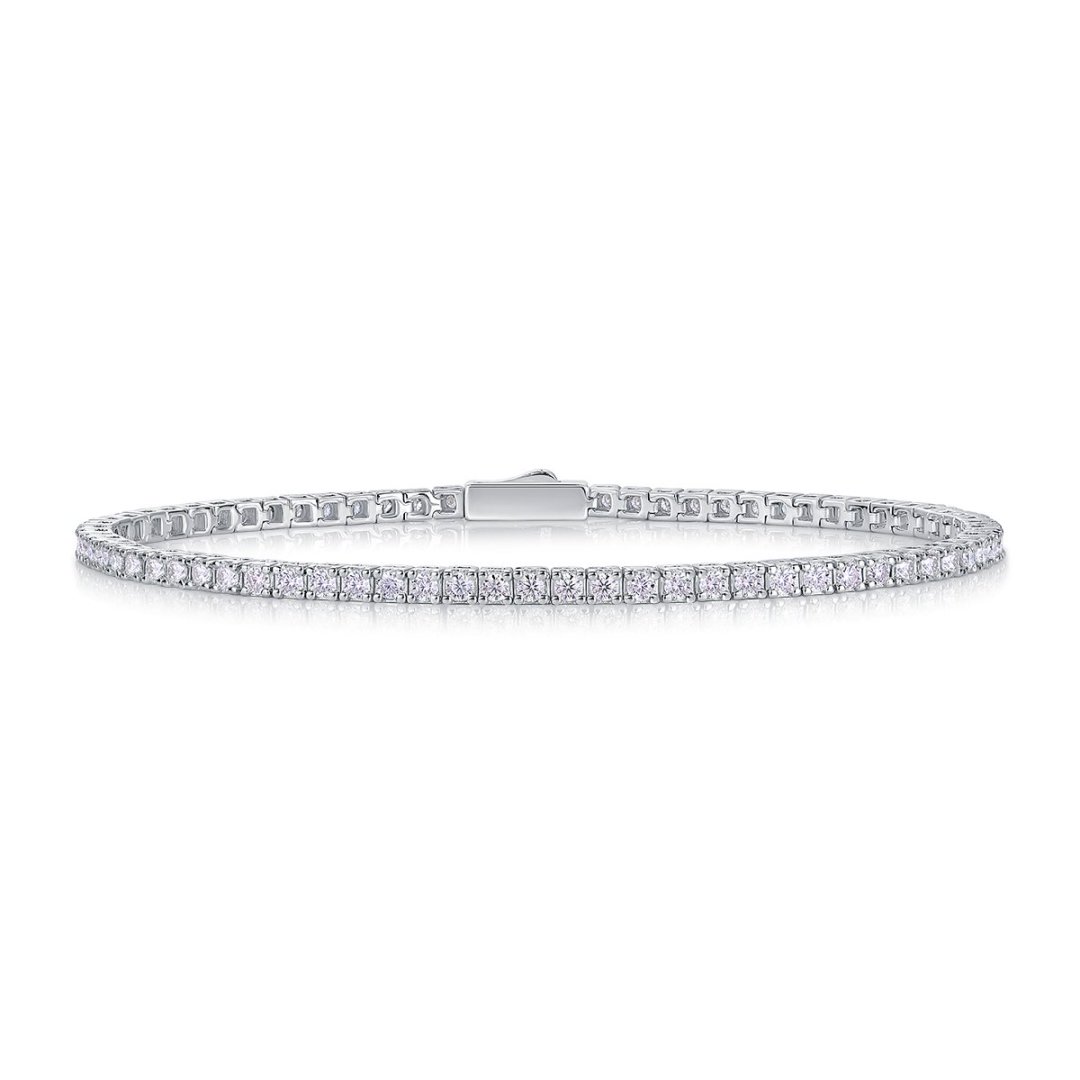
Pick a tennis bracelet if you want an even line of stones and a Cuban link bracelet if you want the links themselves to define the look. A tennis bracelet usually has a separate setting for each stone. A Cuban link bracelet uses interlocking links that sit close together and create a repeating metal pattern. Cuban links can also be set with stones, so the choice is as much about what you see between the stones as it is about sparkle.
Try this comparison in front of a mirror instead of judging only from a close-up photo. Hold your wrist at the distance you would normally see it while talking to someone. A slim tennis bracelet can read as a narrow highlight. A wider Cuban chain shows the shape and edges of its links from farther away. Then look down at the wrist as you type or rest your arm on a table. That perspective reveals the thickness and clasp profile, details that photographs taken from above can hide.
If you are drawn to an iced Cuban chain, check the photos from the side and the underside. A design with stones on the visible faces can retain a strong link pattern. A densely set piece may look more like a broad panel of stones from a distance. The size of the stones, the spacing between links, and the finish around them all affect the result. Decide which parts of the pattern you want to see before choosing the widest option.
Compare the measurements that matter
| What to compare | Tennis bracelet | Cuban link bracelet |
|---|---|---|
| Width | Check both stone diameter and finished width across the settings | Check finished width across the links |
| Thickness | Measure the settings and the clasp separately if one stands higher | Ask for link thickness and clasp thickness in millimeters |
| Length | Confirm how the seller measures the finished bracelet | Confirm finished length and check the fit at the chosen width |
| Visual pattern | Repeated stones with individual settings | Overlapping links with plain or stone-set faces |
A stone diameter is a measurement of the stone. It does not include the metal around it. A finished bracelet can therefore look wider than its stone size suggests. If you are comparing listings, ask for the width across the settings in millimeters, preferably measured at a representative link. You can also compare stone sizes in the Cristiera tennis bracelet size guide. Use finished width when you place a tennis bracelet next to a Cuban chain on your shortlist.
Ask about thickness if you plan to wear either bracelet under a cuff. The highest point might be the clasp, rather than the links or stone settings. A side photograph beside a ruler is a useful starting point. Ask for the actual measurement if the photo was taken at an angle. If you have a bracelet you wear often, compare the candidate’s dimensions with that familiar piece. A narrow strip of paper cut to the advertised width can help you visualize coverage on your wrist, though it cannot reproduce weight or flexibility.
Pick a style for your daily routine
For work, consider where your wrist spends most of the day. If you type with your wrist against the desk, check whether the clasp or a raised setting sits under that contact point. Try the bracelet while sitting and moving your hand as you normally would. A smooth underside may be more valuable than the difference between two similar stone sizes. With long sleeves, check that the cuff moves past the closure without snagging it. When you shop online, look for a side view of the bracelet worn with sleeves if the seller has one.
For an outfit where the bracelet will be the main accessory, choose the profile that fits the other details you plan to wear. A tennis bracelet can repeat the bright points in a pair of stud earrings without introducing another link pattern. A Cuban chain can pick up the broader shape of a chain necklace or a watch band. If you wear little other jewelry, either design can carry the outfit on its own. Compare it in daylight and under an indoor light. Stones and polished metal can look very different in those two settings.
If you will wear the bracelet on weekends, think about the activities involved. A jewelry piece that works well for dinner might be distracting when you carry bags or use tools. Take it off when there is a chance the links will catch or the settings will be hit. If you want a bracelet you reach for every morning, favor a closure you can operate without assistance and a shape that sits comfortably on both sides of the wrist. Test how it feels when you flex your wrist as well as when your arm hangs at your side.
Try the fit before you plan a stack
Use a soft tape to measure the part of the wrist where you want the bracelet to sit. Note the measurement, then check the seller’s fit instructions for the exact model. Bracelets of the same labeled length can feel different when one is thicker or curves less easily. If you already own a bracelet with a similar shape, lay it flat with the clasp open and compare its length using the seller’s stated endpoints. A sizing range is useful only when you know how the measurement was taken.
Start a stack with one piece you already wear. Add the new bracelet on the side where the edges are least likely to meet when you move. Try the combination over a table, then turn your wrist palm up and down. Watch where the clasp lands and whether a stone-set edge repeatedly touches the watch case or the neighboring chain. If the pieces bunch at the narrowest part of the wrist, moving one to the other arm may be more comfortable. A few minutes of normal movement tells you more than a still photo of the stack.
When you compare two widths, look at how the bracelet curves around the sides of the wrist. A broad chain that lies flat across the top may feel stiff if its links cannot follow the curve underneath. A tennis bracelet with taller settings may turn to one side if there is too much extra length. Ask whether the design can be shortened or exchanged. A shortening quote should tell you how the shop will preserve the closure and whether the removed links can be returned to you.
Shop for a gift or compare two quotes
For a gift, start with the bracelet or watch the recipient actually wears. A fine bracelet is a useful clue about preferred width, and a wide watch band may show that the recipient likes more coverage. Look for evidence of the preferred metal color in items worn regularly. If you can measure a familiar bracelet without guessing, write down its finished length and approximate width. Choose an exchangeable stock size when the fit is uncertain, especially if engraving or a custom length would limit the return options.
For your own purchase, compare two listings with similar coverage and length before comparing prices. Ask for the base metal, surface finish, type of stones if the piece is set, and the closure design. Compare stone-set and plain versions of a Cuban chain separately. The amount of metal and the work involved in setting stones differ between those versions, so the prices may reflect several design choices at once. If you prefer a tennis style, start with the Cristiera tennis bracelet collection and use the product specifications to narrow down the dimensions and finish you want.
Before paying, look for a description of repair and adjustment options. A box clasp, lobster clasp, or other closure can vary in size even between pieces in the same collection. Ask for a photo showing the actual hardware. If you want the option to resize the bracelet later, confirm that the seller can match the finish and components. These questions are especially relevant when a bracelet will be a daily piece or a gift that may need an exchange after the occasion.
If you are shopping from photos alone, ask for one picture with the bracelet closed on a wrist of known circumference and a second picture laid flat with the clasp open. The first helps you see how the links sit at the sides. The second lets you see how much length is taken up by the clasp and whether the stone pattern continues close to it. If you are deciding between two finishes, request both pieces under the same light. Comparing a polished chain photographed in sunlight with a tennis bracelet photographed in a dim room can exaggerate the difference in brightness.
Frequently asked questions
Which looks bigger at the same listed width?
Compare the finished width on both pieces first. A stone diameter on a tennis bracelet and a finished link width on a Cuban chain measure different things. After you have comparable measurements, look at a side view and an on-wrist photo to judge how much each design stands away from the wrist.
Can a Cuban bracelet have moissanite?
Yes. A stone-set Cuban bracelet can have stones on selected surfaces or across much of the visible link pattern. Check the listing for the stone identity, the sections that are set, and photos of the sides and underside. These details help you tell how the piece will look as it moves.
Which is easier to wear with a watch?
Either can work if there is room for both pieces. Try the combination and check for repeated contact with the case or bracelet. A low-profile closure may help when the two pieces sit close together. If you notice rubbing during normal wrist movement, wear them separately or on different wrists.
Can I order both styles in the same length?
You can use one length as a starting point, but ask about fit for each model. Link thickness, how the piece bends, and clasp construction can change the usable room around the wrist. Review the exchange and resizing options before ordering a custom length.
Which style should I choose if I can only buy one?
Choose the one that suits the clothes you wear most often and fits well through a normal day. Try a narrow tennis bracelet if you want an even row of stones. Consider a Cuban chain if the repeating link shape is the part you like most. Confirm the measurements before choosing between two similar listings.