
Turn a pendant over and the stone you have been looking at becomes a small piece of architecture. You might see a rim of metal, an open basket with crossing supports, or a smooth plate with one tiny opening. Sellers use the terms open back and closed back fairly freely. Two pendants described by the same term may have very different undersides.
The back matters because it is the surface closest to skin or fabric. It helps determine what can reach the underside of the stone, which metal edges touch the wearer and how much room the maker has allowed beneath the stone. To compare two settings, begin with a front view, a straight view of the reverse and an edge-on view that includes the bail. Each answers a different question.
Identify what is actually open
In an open-back pendant you can see at least part of the underside of the stone through the back. There may still be a substantial metal frame. Look for the edge of the opening, then follow the supporting metal all the way around. Some baskets have a circular opening centered under the stone. Others use several smaller windows separated by ribs, a maker’s motif or a crossbar. These can all be sold as open backs.
A closed back has a plate or other covering across the reverse. It may carry engraving, a pattern or a polished surface. A partly closed setting might have a central hole through a plate or an opening visible only from the side. Instead of trying to settle the vocabulary with a seller, ask for a photograph and describe the feature you care about. “Can a soft brush reach the underside from behind?” is a question with a much more useful answer than “Is this an open style?”
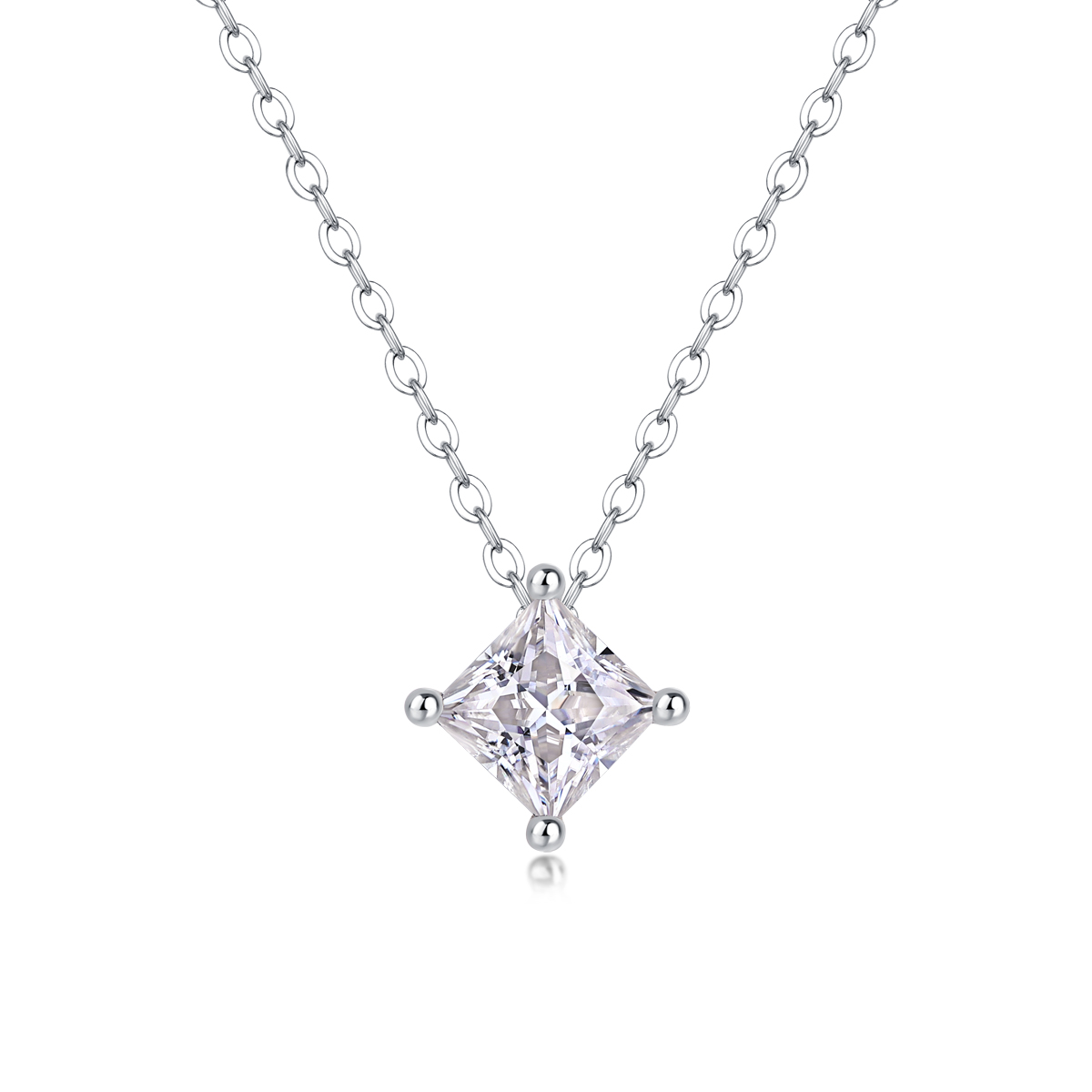
Keep the front setting separate in your notes. A bezel surrounds the stone’s perimeter at the front and can be paired with an open reverse. Prongs secure a stone at specific points and can also sit above a backed gallery. When exploring moissanite necklaces, check both features independently. A front-facing product image rarely gives you the whole construction.
Follow the light from the front
An opening behind a stone is easy to see, so it is tempting to give that opening credit for every difference in brightness. A faceted stone receives light through its upper surfaces. Light can reflect internally and leave through the top again. The pattern reaching the eye depends on the stone’s cut, viewing angle, surrounding light and cleanliness. You cannot rank two pendants for sparkle simply by comparing the size of their rear windows.
Try a fairer viewing setup. Place both pendants on the same neutral surface under one light source. Face the cameras and stones the same way, then tilt the pendants together. If one stone begins at a steeper angle because its setting sits taller, prop the other to match before judging. Watch how the broad bright and dark areas move. Now look at normal necklace distance. A difference obvious on a magnified screen may have little bearing on which piece you enjoy wearing.
Consider what the camera sees behind the stone as well. A black display pad, pale skin and a white card give very different surroundings to exposed metalwork and openings. A brightly polished interior can also be visible through parts of a stone. For remote comparisons, request one clip in diffuse daylight or ordinary room light with a neutral background. Avoid drawing firm conclusions from two separate showroom videos filmed with different exposures.
Read the profile and points of contact
Set the pendant on its side in your mind. Where is the lowest point of the stone in relation to the rim that touches the wearer? An open setting can recess the stone well within a smooth perimeter. Another can leave the tip close to the contact plane. A side view taken level with the rear edge reveals a relationship that a straight rear image cannot show. If the depth matters, request the finished measurement from the back of the setting to its highest point.
With a closed plate, trace the outline that meets the skin. Is the central plate flat, gently curved or set back from a raised rim? A decorative stamp or cutout may introduce another edge. A smooth closed back can feel pleasant, but the word closed tells you little about polishing, burrs or finishing. A buyer evaluating samples can run a clean, soft cloth lightly across the reverse and note where it catches. Stop if there is a protrusion and ask the maker to examine it.
The bail deserves the same attention. Its angle and the way the chain passes through affect how the pendant hangs. A sample photographed flat may tip forward on a fine chain or turn when the chain moves. Hang the pendant on the chain you intend to use, observe it on the body and briefly change position. If it consistently leans, layout and balance are worth checking before you blame the shape of the back.
Judge cleaning access by the route available
The underside of a regularly worn necklace can collect residue from skin products and everyday handling. Before choosing a construction, trace a plausible route for cleaning and rinsing. Can you see the surface you want to clean? Can water leave the same area readily? A large central opening may reveal the middle of the stone but leave narrow spaces behind the rim. Several side windows may provide access even when the reverse looks almost solid.
Follow the maker’s care instructions for the complete pendant, including its metal finish, any accent stones and how they are attached. If gentle washing is suitable, work over a bowl and use a soft tool that can reach the accessible surface without force. Rinse and dry as directed. Avoid pushing a pin or other rigid object through a gallery opening. It is easy to put pressure on a setting edge when the surface you are trying to reach is out of sight.
For a closed or partly closed design, ask whether liquids can enter a cavity and how the maker recommends drying the piece. A rear plate does not prove that the assembly is sealed. If a dull patch persists beneath a stone or moisture appears to remain inside, show the pendant to a jeweler. Repeated soaking or stronger cleaners may add a second problem while leaving the original one unresolved.
Match the construction to its job
Take a small everyday solitaire. The wearer wants an unobtrusive profile under a shirt and easy care at home. An open basket with a broad, smooth contact rim might suit that brief. A tall open basket with a projecting tip might not. A low backed setting could work equally well if the care route is clear. Compare the actual pieces against the brief and let the label serve as a description after the choice is made.
Now consider a gift pendant with an inscription. A plate may make space for a date or initials, but the usable area is often smaller than the pendant’s outside dimensions. Openings, hallmarks, curved edges and the bail can all reduce the flat surface. Ask for the inscription shown at actual size with its orientation marked. Viewed from the back, the bail should be in a predictable position when the recipient reads the message.
A retail buyer has an additional decision. Will staff be able to explain this design accurately from the front of a display case? Write a short merchandise note that names the front retention method, the rear structure and an observable benefit. “Bezel-set round pendant with an open rear window for access during cleaning” gives staff something they can show. Reserve claims about brightness or comfort for comparisons the sample actually supports.
Use a repeatable three-view inspection
For the face-up view, center the camera over the stone and include the whole pendant. Check whether the setting edge looks even around the outline and whether the bail aligns visually with the design. For the reverse, fill the frame with the complete back and keep the image sharp enough to distinguish openings from dark reflections. Ask for another background if a black display pad makes every recess look like a hole.
For the edge view, ask the photographer to bring the lens level with the back and include both the tip area and the bail. A steep three-quarter beauty shot can hide precisely the detail you need. If the sample is being approved for an order, record its item number, stone dimensions and finished depth alongside the images. A photograph without scale is a poor reference when a larger stone is later offered in a similar-looking mount.
Finally, wear the sample on its intended chain long enough to see how it settles in ordinary movement. Photograph the position once it settles without arranging it by hand. That last image often explains more about the finished necklace than a row of loose settings on a white card. Together the views tell you what was built, how you can care for it and how it behaves when worn.
Frequently asked questions
Does open back mean the stone is less secure?
Security depends on how the stone is seated and retained and on the condition of that work. An open basket can hold a stone securely. A rear plate is not evidence that a loose prong or damaged bezel is safe to ignore.
Can a bezel pendant have an open back?
Yes. The bezel describes the metal around the perimeter at the front. A rear window or gallery can remain open underneath it. Ask for a reverse image if the listing shows only the face.
Is a closed-back pendant waterproof?
The term describes visible construction. Joins, small openings and the way the stone is mounted can allow liquid into the piece. Follow the care guidance for the specific pendant before exposing it to water.
Which design is best over a sweater?
Check the finish of the contact rim, the bail and any corners that can touch the knit. Consider the pendant and chain together. A smooth back and stable hang are easier to evaluate on the intended fabric than on a display stand.
What if I want engraving on an open design?
Ask the maker to identify an uninterrupted metal area and give its usable dimensions. A wide rim may allow a short mark, while a fine basket may leave no suitable space. A drawing of the proposed position resolves the question quickly.
What should I ask when the listing has one photo?
Request the reverse, a level profile including the bail and a photograph on the supplied chain. Include one specific question about your priority, such as access for cleaning, the engraving area or the clearance under the stone.