
A tennis bracelet that occasionally rolls as your wrist turns may simply be moving with your hand. If the stones keep landing face down, start by finding out whether the whole bracelet rotates, one stretch of links turns over, or the same single link always tips. Those three observations lead to different next steps. Overall movement points you toward fit and clothing. A repeatable problem at one joint, especially after a snag, deserves a jeweler’s inspection. You can make the distinction without bending a link or tugging on a setting.
It helps to describe what you mean by flipping. Look at the bracelet now, with your palm down. When you turn your palm upward, do the same stones stay against the same patch of skin? Does the clasp travel from the underside to the top while the stones still face outward? Or do you see the backs of the settings on the top of your wrist? Write down the one that happened. People use the same word for all three, and shortening the bracelet will not solve all three.
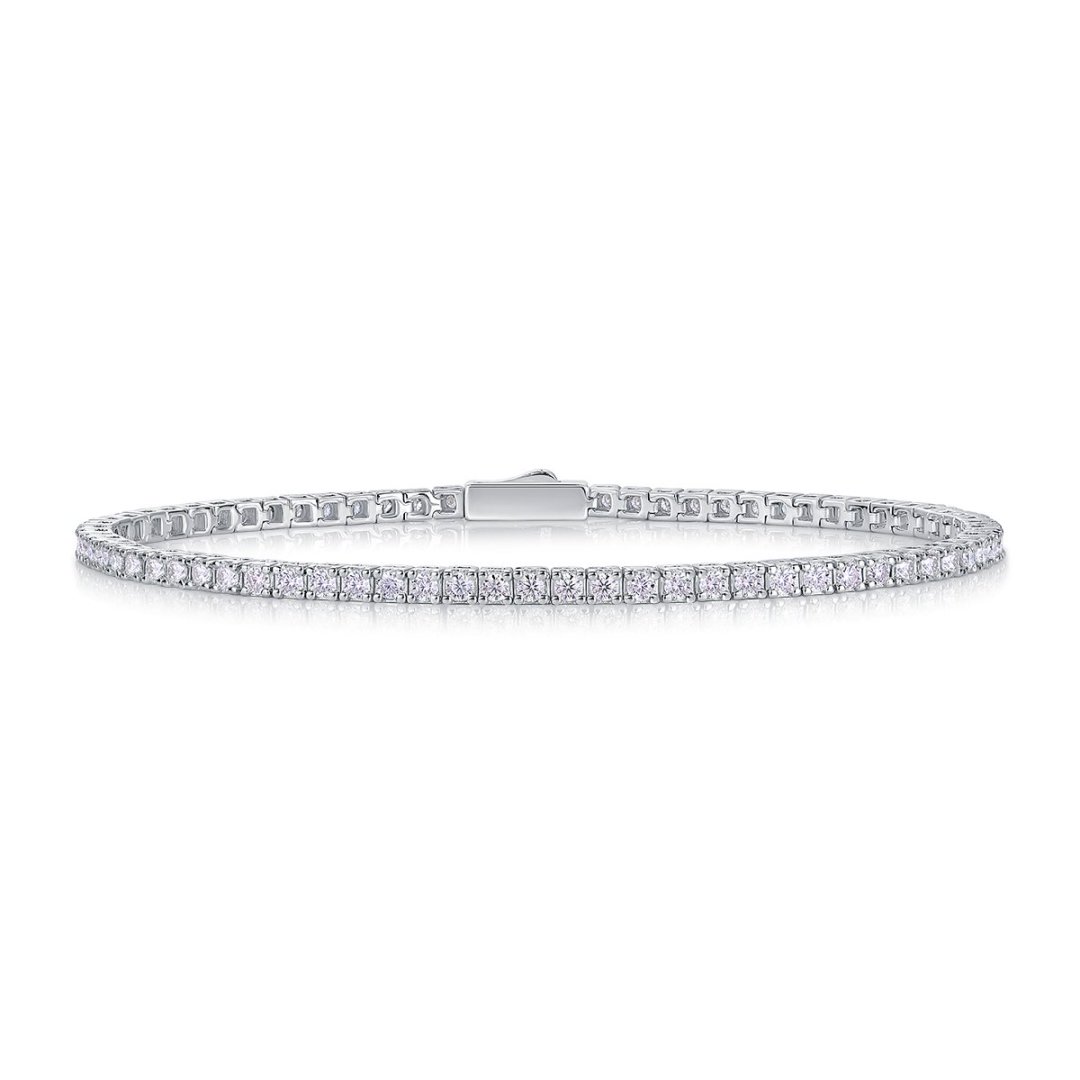
Start on a towel with the bracelet open
Choose a well-lit table, lay down a soft light-colored towel and remove the bracelet over it. Open the clasp normally and let the line rest in a gentle curve with the stones facing up. Lift the ends only as much as you would when putting it on. Notice how the middle settles. A freely articulated bracelet may accept a curve quite easily in one direction while offering less movement sideways. Respect that natural movement. There is no reason to twist the line to see how far it will go.
Look along the edges of the settings at table level. Does one section stay twisted after the rest has settled? Is there a new gap between two neighboring links? Are any stones tilted in their settings or any metal edges visibly distorted? If so, leave the bracelet on the towel and take a clear picture. If the piece caught on something recently, identify the affected area without pulling it straight. The jeweler needs to see how the piece sits in its present condition.
If everything lies smoothly, close the two ends together on the towel without introducing a turn. A bracelet can pick up half a twist while you are holding one end and reaching around the wrist for the other. Starting with the line the right way up gives you a fair comparison. If the fastener does not engage as usual, stop here. The steps in our loose clasp guide address that separate problem.
Observe a single turn of the wrist
Fasten the bracelet on a bare wrist above the towel. Let your forearm rest comfortably and note where the clasp sits. Slowly turn your palm up, then return it to its original position. Look at the clasp first. If it has changed position around the wrist yet the stone faces remain on the outside, you are seeing rotation around the arm. That can be noticeable if the metal face of a box clasp interrupts the continuous line of stones, but it differs from a row of settings turning upside down.
Next follow a short group of stones visually as you move. If several links tip together where the bracelet passes over the wrist bone, notice whether they right themselves as the hand returns to rest. A change that disappears with posture may be related to how the bracelet spans that part of the wrist. If the same individual link remains inverted after the rest settles, take the bracelet off for another look. Do not press the stone face to make the link fall into line.
Use a short phone video if you need to explain an intermittent problem. Film one slow movement in daylight with the clasp in the frame at the start. Then set the bracelet flat and photograph the relevant section from the side. An unedited clip of the change is more useful to a jeweler than a close-up of a bracelet someone has already straightened. Avoid deliberately reproducing a hard snag or pulling on the bracelet just to capture a more dramatic result.
| Observation | Likely next check | Action |
|---|---|---|
| Clasp changes position, stones face out | Overall rotation and wearing length | Compare fit on a bare wrist |
| Several links tip beside a cuff | Contact with fabric or watch | Repeat without the neighboring item |
| Same joint stays twisted on a towel | Possible local damage | Set aside for examination |
Test fit without making the bracelet tighter
Wear the bracelet alone with your arm relaxed at your side. Notice whether it falls well onto your hand and whether a large loop forms when you lift the arm again. A generous fit gives a bracelet room to travel and can let a section roll over. A tighter fit can also be uncomfortable or put the clasp under tension. Use the result to decide whether to try a different length in person. Pinching links together on the wrist with a clip or tying them back will distort the test.
Measure your wrist where you want the bracelet to sit and record how you took the measurement. Then find the original ordered length or have the jeweler measure the finished bracelet. On some designs an open end-to-end measurement includes a tongue that disappears inside the clasp. Comparing that number directly with a closed wearable length can make two otherwise similar bracelets appear less alike than they are. Our tennis bracelet length guide explains the initial fitting process.
If a shop has the same style in two lengths, try both through the same wrist turn. Keep the width and setting style constant. A different bracelet of the same stated length can move differently because its links have a different shape and range of motion. One comparison with a closely matched sample is worth more than several guesses based on how many fingers you can push between the bracelet and your skin.
Separate clothing contact from a mechanical problem
Put on the top that you wore when you first noticed the issue. Start with the sleeve pushed away, then lower the cuff naturally and bend your elbow. A narrow cuff may push the bracelet toward the hand or catch its edge as it passes. If the bracelet stays face up throughout the bare-wrist test and turns as the cuff slides down, try a different sleeve before requesting a permanent alteration. Note whether it is always the edge of the clasp or a particular setting that meets the fabric.
Repeat the observation without a neighboring watch or bangle. A watch case can create a narrow space in which a few links become trapped as you move. If separating the pieces resolves the issue, consider wearing them on opposite wrists for that outfit. For styling options, see our watch and tennis bracelet guide. If the problem continues when the bracelet is worn alone, the watch was only part of the story.
A garment consistently catching at the same small point is different from a cuff pressing against the whole line. Check for an obvious raised edge under good light and put the piece away if you suspect a prong or link is damaged. Running the bracelet back and forth against a knit to locate the point can pull more fibers and place extra stress on the setting. Bring the original observation to a jeweler instead of turning the sleeve into a test instrument.
Decide what to ask at the repair counter
Tell the jeweler whether the behavior has existed since the day you received the piece or started after a specific event. Bring the photographs, receipt and exact style reference if available. Describe the point in relation to a recognizable feature, such as the third link from the clasp tongue. If the whole bracelet rotates, explain where it sits at rest and when it reaches the hand. That gives the jeweler enough information to assess fit and construction separately.
Before agreeing to shorten a bracelet, ask how much wearable length one link represents, whether removing it will preserve the pattern, and what happens to the finish around the adjustment. Ask for the removed pieces back where practical. A proposed change of one link can feel substantial on a small wrist. For a new purchase, compare any exchange option before authorizing work that would alter the piece. Keep the service description with the original product details.
When the bracelet comes back, try it over a counter with the jeweler present. Fasten it yourself and repeat the ordinary motion you recorded earlier. Check that the clasp engages, the bracelet forms a comfortable curve, and the previously affected section now moves as expected. If choosing a replacement from a bracelet collection, use that same gentle test on the actual finished piece. The best reference is how it behaves on the wrist that will wear it.
Frequently asked questions
Is it normal for the clasp to move around my wrist?
Some movement is possible with a flexible bracelet, particularly when your arm changes position. Watch whether the clasp merely travels around the wrist or actually opens or catches. An opening clasp requires attention before further wear regardless of whether the bracelet length otherwise feels comfortable.
Does a wider bracelet always stay face up?
Width is only one dimension. The shape of the underside, link construction, fit and how your wrist moves can all influence the result. Compare two actual samples on the intended wrist. A product photograph taken on a flat stand cannot predict exactly where the bracelet will settle.
Can I bend a stiff link back into place?
Set the bracelet aside and have the joint assessed. A stiff area can have more than one cause, and pressure applied to a setting or connector can create another problem. Photograph how the bracelet lies naturally and identify whether the stiffness appeared after a snag or impact.
Should I sleep in it to see if the problem improves?
Take it off and assess the movement while you can observe it. Bedding can catch a setting and will tell you very little about the fit during normal daytime wear. Store the bracelet separately in a gentle curve until you can inspect it in good light.
What if the bracelet only flips while I type?
Look at where the underside of your wrist meets the desk and whether a cuff or watch is pressing the bracelet against that surface. Compare a few ordinary movements away from the desk. If you see the same localized twist afterward, stop wearing the piece and ask for an inspection.
Can the seller diagnose it from a photograph?
A photograph can show orientation, a visible gap or the position of a clasp. A short video can show when the change occurs. Neither gives the seller a hands-on assessment of joint movement or stone security. Ask whether an in-person inspection is needed before authorizing a repair or size change.