
If a necklace has a sharp bend that remains when the chain rests freely, take it off and stop trying to straighten it. Lay the piece in a broad curve on a smooth surface and support the pendant separately. A loose twist can relax when the ends are free. A section that stays creased, sits at an odd angle or looks different from its neighbors deserves a closer look from a jeweler. Rolling it under a heavy object or pulling the ends apart can turn a small problem into a damaged link.
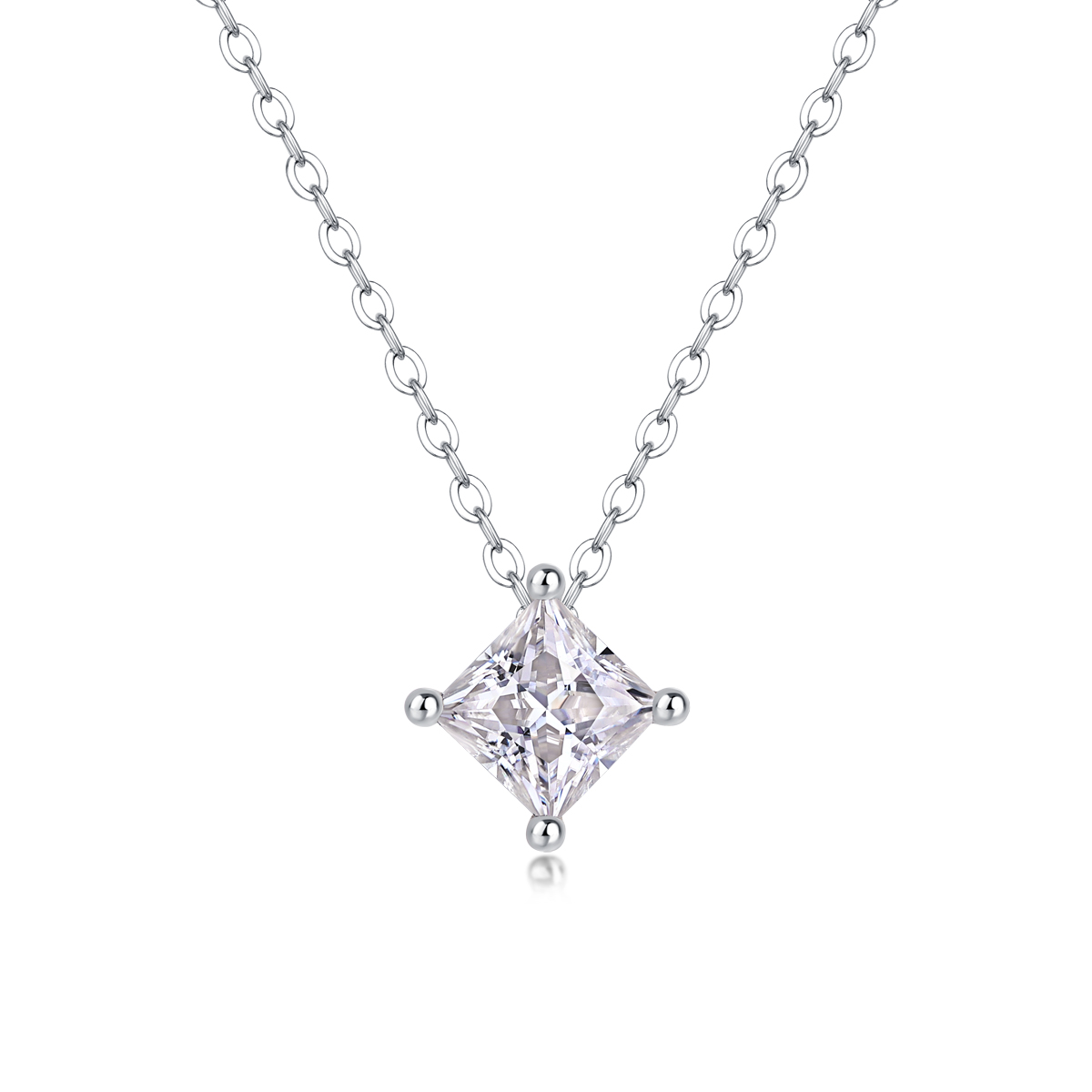
First, take the weight off the bend
A necklace caught in a drawer or under a jewelry box lid is often under tension before you touch it. Lift the object trapping it, or move the box lid away, before lifting either end of the chain. If a pendant is hanging over the edge of the table, slide your hand beneath the pendant first. The object you can see may be light enough to pick up easily, yet its weight at the far end can pull on a single small section of chain.
Choose a smooth, uncluttered area in good light. Set a light-colored sheet of paper beneath a dark chain or a dark, smooth card beneath a pale one. A towel may feel like a soft work surface, but fine loops can catch on links or hide a tiny loose component. Leave room to lay the chain out without drawing it taut. Keep the clasp, extender and pendant visible so you can understand how the whole necklace arrived at its current position.
If the necklace is still around your neck and caught in clothing, give the fabric slack and get help opening the closure. Avoid pulling the necklace over your head or forcing the trapped section through a cuff or collar. Once free, leave the piece lying in the position it naturally takes. A photo at this stage may be the clearest record of the event, especially if a loosely twisted portion later relaxes while the actual crease remains.
Read the shape that remains on the table
A twist affects the orientation of a length of chain. A knot involves one section passing around or through another. A kink is a localized change in how a section bends or lies. These descriptions help you explain what you see without making a repair diagnosis. A single necklace can show more than one. For instance, a pendant may be caught in a loop while a separate section near the clasp carries a sharp crease from the lid of a box.
Open the clasp if it moves normally and is easy to reach. Set the two ends down separately and allow the chain to settle without pulling. Trace its path with your eye, starting at the clasp and moving toward the opposite end. If you see a loop crossing itself, note where the chain enters and leaves the loop. If you see an abrupt corner with no crossing, take a close photograph. Resist the urge to bend it in the opposite direction to see whether it remembers its old shape.
Look across the surface from the side as well as straight down. Reflections can make a smooth section appear darker than its neighbors. Move the light or change your viewing angle while keeping the necklace still. A dark stripe that moves with the light can be an optical effect. A ridge visible from several angles or a link sitting outside the usual line is a different observation. Neither proves how strong the chain is. If a suspect area remains, let a jeweler assess it before hanging the pendant from it again.
Why the type of chain matters
In an open-link chain, individual links can often be seen pivoting relative to their neighbors. A decorative flat chain may use closely fitted elements that produce a relatively continuous face. A curve that looks perfectly natural in one construction can put a sharp fold across the face of another. The British Chains guide to herringbone construction explains how a tight fold can distort the closely packed links. This is one reason flat herringbone chains deserve particular care when a crease appears.
Do not identify a chain solely by the word silver or gold in the listing. Those words describe aspects of the material or appearance. They tell you little about its link pattern, profile or flexibility. Find the original description or a clear photo of the piece before the incident if you can. A jeweler who knows the model may be able to tell from a whole-chain photo whether it is worth bringing in for a closer inspection. Give the model name rather than guessing from an online illustration.
The location of the bend also matters. A crease in an uninterrupted section, a distorted end fitting and a bend immediately beside a fixed pendant can require different decisions. Observe which part actually carries the angle. A clasp tag lying sideways can look dramatic while the load-bearing links next to it remain in line. Conversely, a tiny distortion beside the end cap may be difficult to see in a photograph yet important when the clasp is fastened. Ask about the entire connection if it took the force of a pull.
Handle the pendant as a separate question
A removable pendant may slide freely along the sound portion of a chain. That does not mean you should draw it across a suspect section to remove it. If the bail would have to pass over the crease, leave the pieces together and support them both. If the pendant comes off at the undamaged end without resistance, store it in a separate compartment while the chain is assessed. Do not squeeze an end fitting through a narrow bail just to separate the pieces.
With a fixed pendant, observe both attachment points. Did the chain catch at the left side while the pendant turned toward the right? Is one connecting link sitting differently from its counterpart? Take one picture of the whole arrangement and another of each side at the same scale. You can then explain which side caught and which side you used for comparison. Pulling on the two sides to make the pendant look centered in the photo would erase some of that information.
Before switching to a spare chain, confirm that the pendant and the replacement are compatible. Its end fitting must pass through the bail without force, and the chain should suit the pendant’s weight and construction. If in doubt, take both to the jeweler. The fact that a thin replacement slides through easily only answers the question of clearance. It does not establish that the combination is suitable for daily wear.
What to send a repairer or seller
Send a clear whole-necklace photo, a close view of the bend from above and a side view in which the chain is resting freely. Add one short account of what happened, including whether the necklace was pulled, trapped under a lid or found that way on unpacking. Identify the metal, finish and chain style if known. When reporting a new delivery, keep the packaging and photograph how the necklace was secured. The packing arrangement can explain pressure at one particular point.
Ask what a proposed repair would change. Could the finished section look different from the neighboring links? Would a repair shorten the chain, reposition a pendant or interrupt a continuous flat pattern? If a replacement is suggested, ask whether it includes the original style of end fitting and the wearable length you liked. A technically feasible alteration may be a poor purchase if it changes the one feature that made you wear the necklace in the first place.
For a sentimental piece, explain which parts are important to retain before authorizing work. A replaceable chain that carries an inherited pendant presents a different decision from a chain whose original links are themselves meaningful. Ask for the assessment and proposed work in writing, together with the cost and expected finish. A photograph can help with an initial conversation; the final decision may depend on inspection of the physical piece.
Prevent pressure at the same spot
Recreate the storage arrangement using the empty box first. Does the insert press against the lid? Is there a narrow slot where a flat chain must make a hard turn? Is a heavy pendant free to swing across the chain when the box is closed? A change as small as moving the pendant into its own supported position can remove pressure from a recurring trouble spot. Use a holder that lets the sound chain follow a broad, easy curve.
If the bend appeared while wearing a necklace, think about the moment when the chain was trapped. A shoulder strap may pin it to clothing while the pendant moves elsewhere. A neckline may catch the pendant as a sweater comes off. Put the necklace on after dressing and take it off before removing close-fitting clothing when practical. When browsing necklace styles, look at the chain construction and attachment as carefully as the stone. Both influence how you will handle the piece every day.
Frequently asked questions
Can a kink disappear by itself?
A loose twist may relax when you open the clasp and let the chain rest. A persistent crease or a link that remains out of line calls for inspection. A smoother appearance after handling is not proof that a previously distorted section can safely carry a pendant.
Should I use pliers to straighten one link?
Leave a suspect link in its current state until a jeweler sees it. Pressure from a tool can mark a finish, distort an adjacent link or change how an opening meets. A clear picture with the chain supported gives the repairer more useful information than a home adjustment.
Can a chain be damaged even if it has not snapped?
Yes. A section can sit out of line, become visibly creased or stop moving like its neighbors while the necklace remains in one piece. Avoid a pull test. Note the location and ask the jeweler whether the construction can be assessed and repaired economically.
How should I take the chain to a shop?
Place it on a smooth support with the pendant held separately from the bent section. Use a container long enough to avoid forcing a tight fold, and keep loose components in a separate closed compartment. Tell the receiver where the damage sits before anyone lifts the piece by one end.
Should I clean the dark line before sending a photo?
First photograph it under two lighting angles. If the line corresponds to a raised or distorted section, leave it alone. Cleaning or polishing cannot establish whether the structure is sound and may make the original evidence harder to interpret. Include a photo of a neighboring section for comparison.
What if the seller offers a new chain instead of repair?
Compare the replacement’s link pattern, finish, wearable length, end fitting and suitability for the pendant. Ask whether you can retain the old chain if that matters to you. A replacement can be a sensible outcome when repair would leave an obvious interruption or alter the way the necklace hangs.