
Many moissanite rings can be resized, particularly designs with a plain section of silver, gold, or platinum at the bottom of the band. The answer for a particular ring depends on its metal, setting, condition, and the amount of size change required. Stones around the entire band, intricate side details, and plated finishes can make the work more complicated or make an exchange a better choice.
Have a jeweler inspect the complete ring before authorizing a change. A photograph can help with an initial conversation, but the stone alone cannot tell you whether the mounting can be altered successfully. The goal is a ring that fits comfortably and retains sound settings, a consistent shape, and an appropriate finish after the work.
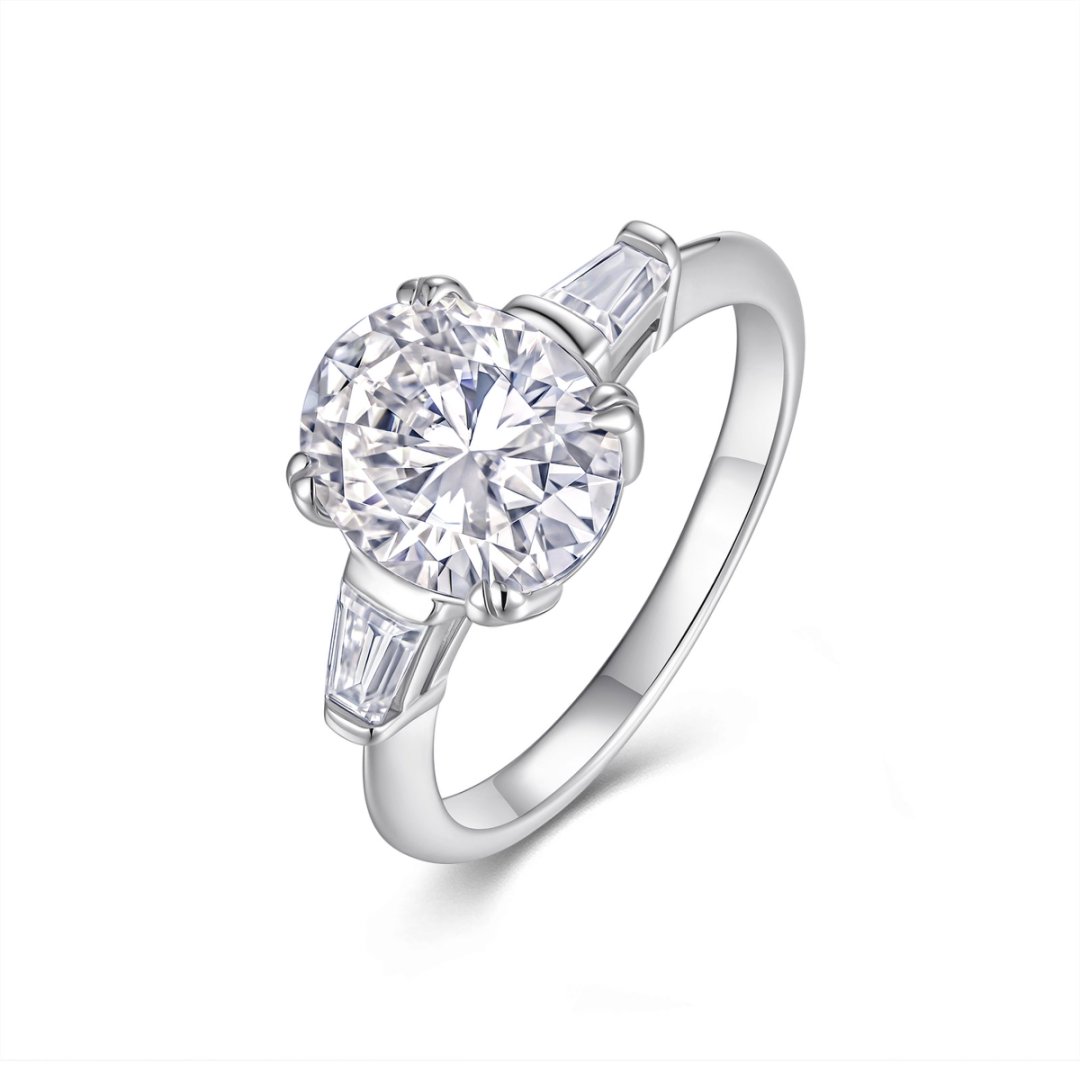
Start With a Professional Fit Check
First establish the size you actually need. A ring that feels tight on one hot afternoon may fit differently at another time. Bring the ring to a fitting and explain when it feels uncomfortable, whether it spins, and how it moves over your knuckle. Try sizing rings close to the width and inside profile of the band you want to alter. A broad band can feel different from a narrow one at the same marked size.
Tell the jeweler whether you wear it alongside a wedding band. The combined width of a stack can change the feel even when each ring is comfortable alone. Try the intended combination during the fitting if possible. If your engagement ring fits on its own but becomes uncomfortable in a stack, the jeweler needs that information before selecting a target size.
For measurements made at home, treat the result as preparation for a fitting. Our ring size guide explains useful starting checks. Confirm the final decision with suitable gauges when the ring is expensive to alter or difficult to exchange. If discomfort comes from a rough inside edge, an uneven shank, or a damaged section, changing the size may need to be combined with another repair.
Identify the Metal and the Surface Finish
| Item | What matters | Confirm before proceeding |
|---|---|---|
| Solitaire with a plain lower shank | Space for a conventional alteration | Metal, shank condition, and proposed size change |
| Pavé or channel-set band | Stones may be affected by changing the band’s shape | Extent of stone coverage and post-work setting inspection |
| Full eternity band | Continuous stone pattern limits alteration options | Exchange, remake, or a specialist assessment |
| Plated silver ring | Work may affect the surface finish | Repair method, refinishing scope, and color match |
Find the original product description, receipt, or specification if you have it. Give the jeweler the base metal and any plating information. A white surface might be rhodium-plated silver, white gold with a plated finish, or another material. Similar appearance does not establish the composition or the repair method. Explain any previous resizing or repair work as well.
Sterling silver and conventional precious-metal bands may be candidates for resizing, subject to their construction and condition. Some alternative materials need different approaches, including replacement. Ask whether the jeweler works on your specific metal and whether the ring can be assessed before committing to the job. A universal promise that every ring can move a fixed number of sizes is too broad to rely on.
For a plated ring, ask what will happen to the finish around the work area. Cutting, joining, and polishing can affect the surface, so the quote may need to include refinishing. Check whether that means treating a local area or refinishing the complete ring, and whether the expected shade matches the rest of your jewelry. The seller may also have a particular repair policy for plated pieces. Confirm those terms before having another workshop make changes.
Look at the Band Where the Change Would Be Made
A plain lower shank usually gives a jeweler more room to work than a band covered in stones or decoration. To make a ring smaller, a conventional method involves removing a section and joining the ends. Making it larger may involve adding metal. The exact technique depends on the material, desired change, and setting. Ask the jeweler to explain the proposed approach and its effect on the finished shape.
A thin or worn shank may need restoration as part of the alteration. Look at the underside, where years of contact can leave less metal than there is near the shoulders. An existing join, deep engraving, openwork, or a hollow section can change the options. The relevant question is whether this ring has enough suitable material in the right place for the proposed work.
Consider the position of engraving or a pattern after the size changes. Lettering may become off-center or require restoration. A repeated decorative motif may be difficult to continue across an added section. If those details matter to you, have them included in the discussion and quote. Take clear photographs before leaving the ring so you and the jeweler have a reference for its appearance.
Check How the Setting Could Be Affected
Changing a band changes its geometry. That can matter where small stones are set along the shank or where the shoulders connect to the head. A ring with a large plain area underneath may offer more flexibility than one with stones extending close to the bottom. The type and extent of the setting need to be assessed together with the proposed change.
GIA’s ring sizing guidance identifies pavé, channel, and full eternity designs as potentially difficult to resize. These are construction considerations that also matter when the stones in the mounting are moissanite. They support asking for a design-specific assessment before assuming a band can be altered.
Ask whether the quote includes inspecting and, if necessary, adjusting the settings after resizing. Do the same for a hidden halo, side stones, or a detailed gallery. Those parts may not be visible when you look straight down at the center stone. If you are comparing a new ring instead, our prong and bezel setting guide can help you identify the construction you are discussing.
When an Exchange or Remake Deserves Consideration
A full eternity band has stones arranged around the entire circumference. Changing that circumference may disturb the repeated pattern and the seats holding the stones. Depending on the design, an exchange or a newly made band in the correct size may be the more practical route. Have the seller explain the available options before you pay for an alteration attempt.
A substantial size change, a heavily worn band, or a design with extensive openwork can also justify comparing resizing with replacement. Ask what each option would preserve, what it would change, and what the total cost includes. A remake may involve using the existing stone in a new mounting, but its feasibility needs confirmation from the jeweler handling the piece.
If the ring is newly purchased, read its return and alteration terms before proceeding. Resizing, engraving, or work performed by another workshop may affect the seller’s service options. Ask for the applicable terms in writing. For a surprise gift, choosing a ring with a clear exchange process can be more useful than relying on a general statement that it is resizable.
Agree on the Scope, Price, and Handover Record
Request a quote that identifies the current size, target size, metal, alteration method, and any refinishing. Ask whether stone inspection, tightening, and engraving work are included or priced separately. If the workshop cannot confirm the full scope until it examines the ring, understand when it will contact you and which additional work needs your approval.
At handover, record the ring’s visible condition and any marks, loose stones, or worn areas already present. Ask for a receipt describing the ring and the work requested. If you have a stone report or original product specification, keep your own copy and provide the relevant information the workshop asks for. Agree on an estimated completion date and how you will be notified if the plan changes.
There is no useful single resizing price for all moissanite rings. Labor, metal, size change, stone setting, surface restoration, and existing damage affect the quote. Compare equivalent scopes if you consult more than one jeweler. A low price that omits replating or setting checks can lead to a different finished result from a more complete quote.
Inspect the Ring When You Collect It
Try the ring on before leaving. Check that it passes the knuckle as expected and feels comfortable at the base of the finger. If you normally wear it in a stack, bring the other ring. Confirm the size with the jeweler and discuss any difference between how the sizing sample felt and how the finished ring feels.
Look at the underside and sides under normal light. The surface should be finished consistently with the agreed work, without an obvious sharp edge or rough join. Check engraving, decorative patterns, and color. Ask the jeweler to show you the results of the setting inspection. If you notice a new catching point, movement, or an uneven stone, have it evaluated before wearing the ring regularly.
For future purchases, ask about sizing when choosing a design from the Cristiera moissanite ring collection. Include your intended size, the style reference, metal and finish, and whether the ring will be worn beside a wedding band. That gives a clearer basis for discussing an appropriate size and available service options.
Frequently Asked Questions
Can a 925 silver moissanite ring be resized?
Many sterling silver rings can be resized, but their design and condition still matter. Show the jeweler the full ring and disclose any plating. Ask whether the alteration requires refinishing and whether the settings will be checked afterward.
How many sizes can a moissanite ring be changed?
There is no single safe range for every ring. The usable shank, metal, setting coverage, and proposed change determine the options. Ask the workshop for the recommended range for your particular ring after it has been inspected.
Can a moissanite eternity ring be resized?
A full eternity design can be difficult to alter because stones and their settings run around the whole band. Ask about an exchange, remake, or specialist assessment. Do not assume that a small change will automatically be straightforward.
Will resizing affect a gold-plated silver ring?
The work can affect the plated surface, especially near a join or polished area. Have the jeweler explain any required refinishing and the expected color. Include that work in the quote so the finish is part of the agreed result.
Can I resize my ring myself?
Have the work assessed and performed by a qualified jeweler. Bending or stretching a stone-set ring without the appropriate equipment and assessment can change the mounting and affect stone retention. Temporary fit aids also need to suit the ring and your comfort.
Should I resize before choosing a wedding band?
Confirm how you want the pair to fit together before making the alteration. Bring both rings or a comparable wedding band to the fitting. The total width and how the settings meet can change how the engagement ring feels on your finger.