
Choose a tennis bracelet when you want a line of stones that follows the shape of your wrist. Choose a bangle when you like the outline of a rigid piece, even when it stands a little away from the skin. If both appeal to you, try this before looking at another close-up: rest your forearm on a table, reach for a glass and put on a jacket. The piece you enjoy during those three movements may be different from the one you preferred on a display cushion.
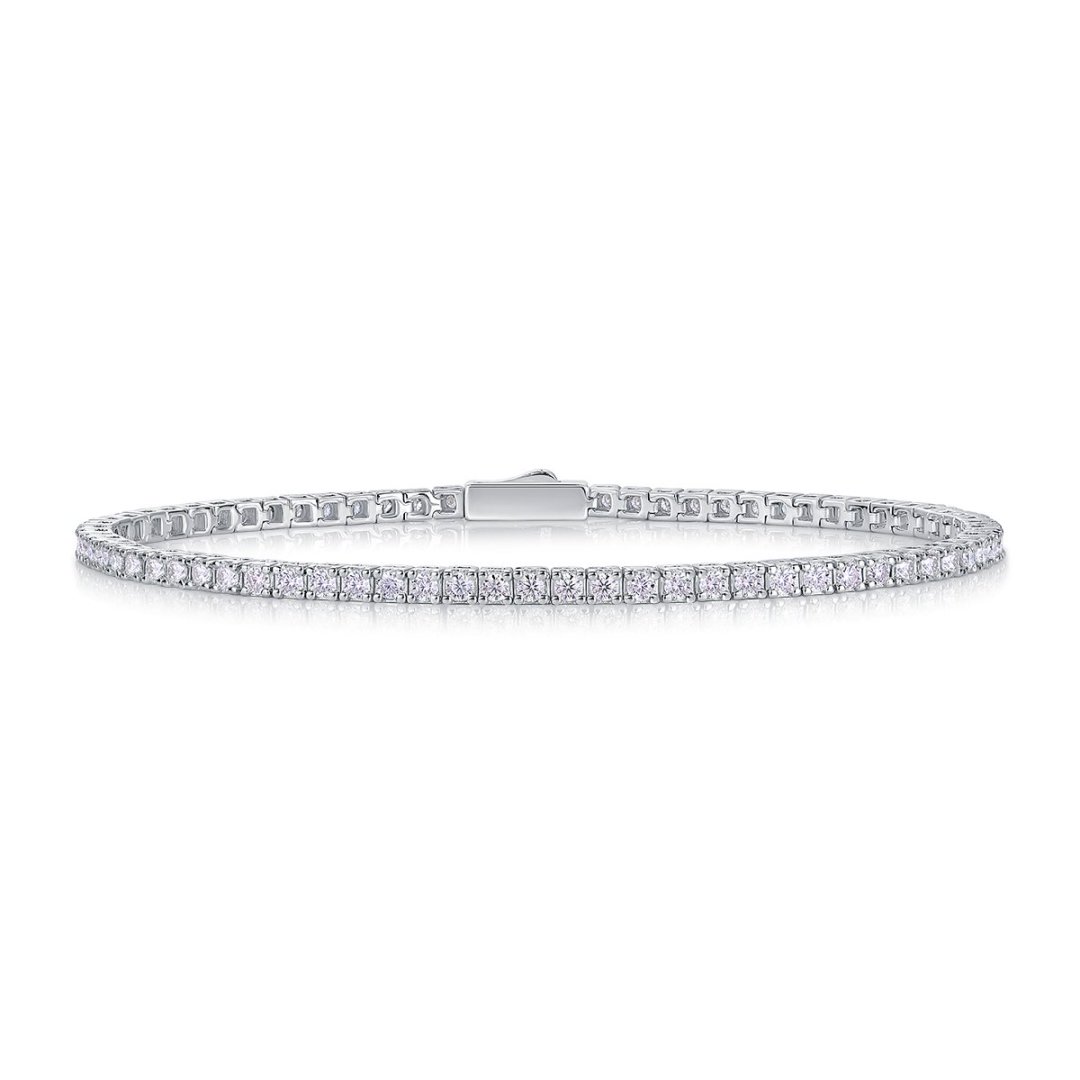
What moves when you turn your wrist?
A tennis bracelet is made of linked sections. As you turn your wrist the sections move relative to one another, allowing different portions of the row to follow the curve of your arm. A bangle holds its own shape. A round slip-on bangle can roll toward the hand, while a closely fitted oval hinged bangle may stay nearer its starting position. Neither the word bangle nor a photograph taken from above tells you how freely a particular piece will move on your wrist.
Imagine sliding a hand into a coat pocket. A flexible bracelet can gather slightly as the cuff pushes it back. A rigid bangle takes its whole outline with it. Depending on the sleeve, that may feel like a pleasant reminder of the jewelry or like a ring of metal lodged inside your coat. Try both with the sort of clothing you actually wear. A sleeveless fitting in a shop tells you remarkably little about your favorite winter jacket.
Look down again with your palm resting on the table. How much of the stone row do you see? Some bangles carry stones only across their upper face, leaving polished metal underneath. On a tennis bracelet, the decorated section may continue nearly to the clasp. That changes what you see when the piece rotates, and it changes what touches a desk. A bangle with stones all around behaves differently here from a similar front-set version. Ask to see the underside before deciding.
Measure for the opening as well as the wrist
For a flexible bracelet with a clasp, begin with your wrist measurement and the seller’s instructions for choosing a finished length. A favorite bracelet that fits well is an excellent second reference. Lay it open on a level surface, include the closure as instructed by the seller, and say precisely how you measured it. Some clasp components overlap when fastened. A maker comparing measurements needs to know whether your figure refers to a straight end-to-end length or the effective closed length.
A closed slip-on bangle has a different job: the opening must clear your hand before the piece can settle on your wrist. If you own one you enjoy wearing, measure across the inside opening through its center. For an oval, record both the long and the short inside dimensions. Keep the outside edges of the metal clear of the ruler marks you are reading. Two visually similar bangles can have different internal space when one has thicker walls or a more substantial setting.
A hinged bangle opens around the wrist, so the fit over your knuckles is usually less relevant. Ask how far it opens, where it fastens and what its internal dimensions are when closed. If you can try it on, let the seller operate an unfamiliar closure first. Notice whether the hinge or clasp presses against your wrist bone. A shape that measures correctly in two directions can still feel uncomfortable if its deepest or least rounded part lands exactly where you rest your arm.
| Design | First measurement to request | Movement to try |
|---|---|---|
| Flexible tennis bracelet | Finished wearable length | Lower the hand and watch where the row settles |
| Slip-on bangle | Inside diameter or both inside axes | Slide it over the hand without forcing it |
| Hinged bangle | Closed inside width and depth | Fasten it and turn the forearm |
Decide how much sparkle you want in view
A bracelet photographed straight across a light box shows every stone along one line. On the wrist, only part of that row faces you at any moment. The effect of a fine tennis bracelet is often a succession of small flashes as the hand moves. A front-set bangle can make a more concentrated statement. Its decorated section may look almost like a single panel, particularly when the stones sit close together inside a visible metal border.
To compare the designs fairly, ask for the finished width across the top, the length of the stone-set section and a photograph of the bracelet turned slightly toward the thumb. A three-millimeter stone is a measurement of the gem. The finished bracelet may be wider because of its mounting. A narrow row bordered by polished metal can look broader from across a room than a close-up of the stones suggests. An afternoon fitting near a window can tell you which part you notice first.
For someone who likes the look of plain silver and just wants a little sparkle, consider a bangle with a shorter stone panel. For someone who wants the sparkle to continue when reaching for a menu or handing over a card, look at a tennis bracelet with the row carried around its sides. If possible, view a short video of the piece after the wearer has moved naturally. A hand continuously centering the setting can hide the very detail you need to see.
Pay attention to putting it on by yourself
If you normally put on jewelry alone, give the closure as much attention as the top of the bracelet. A tennis bracelet can require you to hold one end steady while guiding the other into the clasp. Try it with the hand you normally use and with the bracelet on your usual wrist. See whether any secondary catch is easy to identify and operate. A beautifully finished clasp can still be a poor match for a person who prefers a simple motion in the morning.
A slip-on bangle eliminates the fastening step, but the passage over the hand has to feel comfortable both going on and coming off. Test it without rushing and avoid forcing a tight sample just to see how it looks. A hinged piece offers another route for someone who enjoys a structured shape yet wants a closer fit than their slip-on bangles allow. Check whether you can find the opening by feel and tell when the closure is properly engaged.
Compare the styles in three real outfits
Start with a work shirt. Button the cuff and type a short sentence or move a mouse. Does a rigid lower edge make contact with the table each time you reach? Does the flexible row sit comfortably under the cuff? Repeat with the cuff undone if that is how you wear it. People who spend much of the day at a desk often notice differences that hardly register during a standing fitting. Test the wrist you actually use at the desk.
Next try the piece with a weekend sweater. Put the sweater on before the bracelet, then let the sleeve fall as it normally would. If most of the jewelry disappears, decide whether you enjoy the occasional glimpse or want a clearer outline at the hand. Finally try an evening outfit with an exposed wrist. The larger silhouette of a bangle may come into its own here, whereas an understated tennis bracelet can complement a strong ring without drawing attention away from it.
For a gift, find out which bracelet the recipient already fastens most often. A previous purchase tucked away in a drawer may indicate a clasp they dislike rather than a change in taste. Someone who wears a plain rigid bangle daily already gives you clues about an acceptable shape and interior size. Someone who lives in a delicate chain bracelet may prefer a flexible moissanite row of comparable wearable length. Use the familiar piece as a reference and check exchange terms for the selected size.
Choose between two finalists
Suppose both finalists have round moissanite stones and similar prices. One has a continuous narrow flexible row; the other has a wider top section on a plain oval bangle. Write down the impression each makes from across a table, the sensation beneath a cuff and the ease of putting it on independently. If your answer favors different pieces for different occasions, decide which occasion you are actually buying for. There is no reason an anniversary dinner and an ordinary workday have to produce the same choice.
When comparing Cristiera bracelet styles, keep the dimensions beside the photos. A loose fit that looks graceful on a model may be distracting on a smaller hand, and a close-fitted sample may hide the movement you would enjoy in a slightly different size. Ask to see the same variant you plan to order and confirm how its clasp or hinge contributes to the dimensions. A good decision should still make sense once the display cushion is gone.
Frequently asked questions
Can I use my tennis bracelet length to order a bangle?
Use it as a clue to the wrist fit you enjoy, then get the bangle’s actual inside measurements. A closed bangle has to pass over the hand, and an oval hinged bangle can feel different from a round one even when the nominal size looks similar. A well-fitting existing bangle makes the closer comparison.
Which style is quieter at a desk?
Try the underside against the surface where you work. A rigid bangle may make a distinct sound when it touches the desk, but a tennis bracelet clasp can make contact too. Which one you hear depends on the fit, where the piece settles and how you place your wrist while typing.
Can I wear the two together?
Try them together with the hand lowered and while reaching. Check whether the bangle’s edge repeatedly hits the tennis bracelet’s settings or closure. If the pieces rub or crowd each other, try opposite wrists. For a favorite combination that makes frequent contact, show both pieces to a jeweler before regular wear.
Which style looks wider on the wrist?
Compare the outside width in millimeters and the length of the decorated section. A bangle with a short, prominent top can look bold from above and quite plain from the side. A fine tennis bracelet can read as a brighter continuous line when viewed from a range of angles.
How should a retailer photograph a bangle for online customers?
Show the inside opening with a scale, the piece on a wrist and the clasp or hinge both open and closed if present. Include the wrist measurement of the wearer when available. A top view sells the design; a clear inside view helps the buyer choose a size they can wear.
Is one style easier to give as a surprise?
The easier choice is the one for which you can establish a reliable fit. A known bracelet length can help with a flexible piece. A known interior bangle measurement helps with a rigid one. If you have neither, ask the retailer about exchanges before choosing a personalized or made-to-order version.