
Look at the strip of metal between a moissanite center stone and the finger beside it. On a polished ring, you may see a sharp white reflection travel down that strip as the hand turns. A brushed band breaks the reflection into a softer patch. This is often the easiest way to choose between the two finishes. Ignore the sparkle of the center stone for a moment and watch what the metal itself does in ordinary light.
The finish describes the surface of the band. The metal underneath, any plating over it, the shape of the shank and the way the stone is set are separate specifications. Two rings sold as brushed silver can look different on delivery and require different work when they eventually need attention. A good comparison starts with the region of the ring you can actually see.
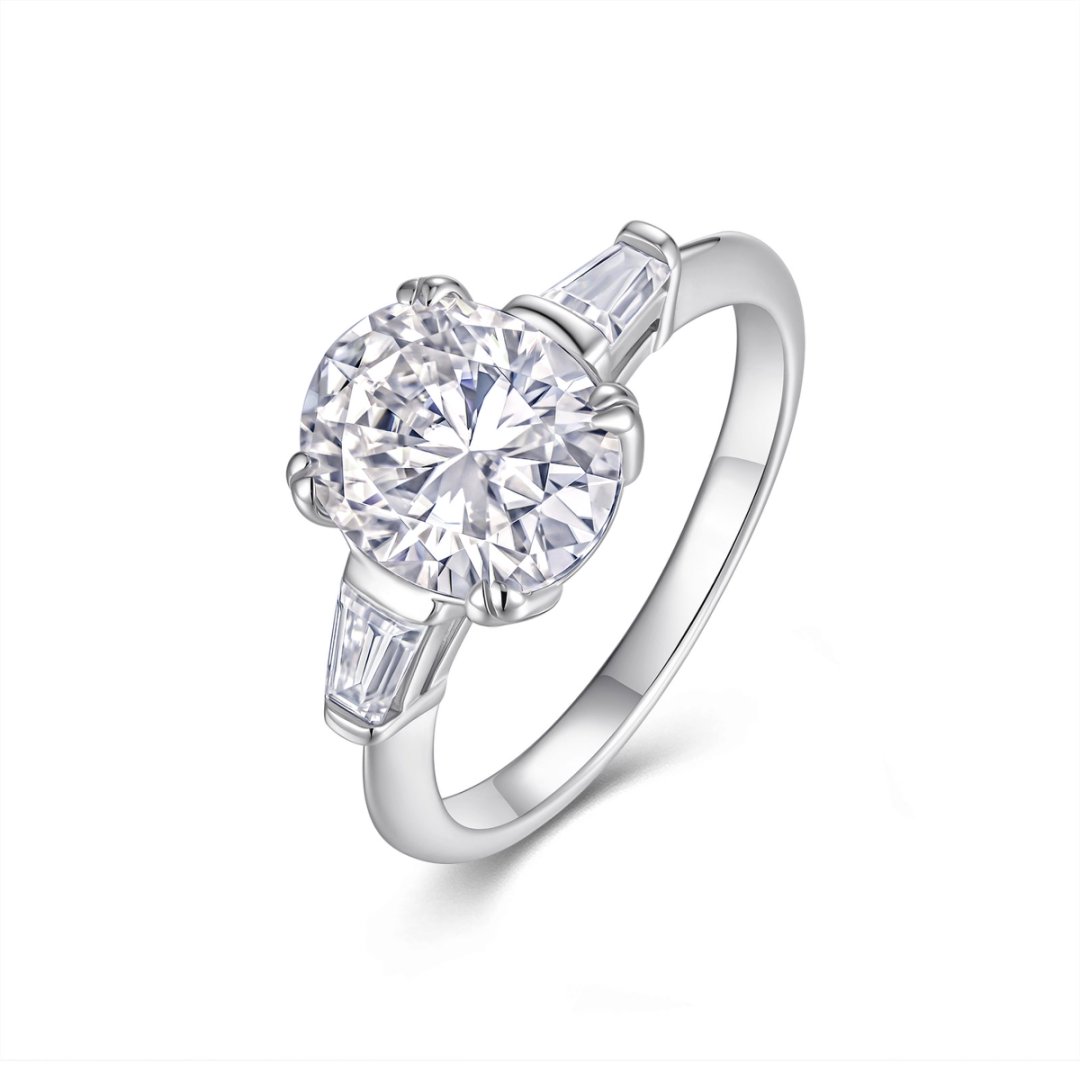
What a finish name can tell you
High polish usually describes a surface brought to a reflective finish. Under a long window or light strip it can show a distinct streak with a fairly clear edge. A brushed surface carries a pattern of fine marks. Those marks can run around the band, along its length as seen from above, or across it, according to the intended finish. A fine pattern may blend together at arm’s length. A coarser one can remain part of the design even when you move away from the counter.
Satin, matte and brushed are words that sellers sometimes use differently. One workshop’s satin may show directional lines under magnification. Another sample with a similar name may look almost evenly frosted to the eye. The jeweler Aide-mémoire illustrates how finish terminology and wear can vary. Ask for a photograph of the actual finish and, if the distinction matters to the purchase, a finished sample. A word on an order form cannot describe grain scale or direction with the precision of a reference piece.
| Detail | Brushed band | Polished band |
|---|---|---|
| Window reflection | Soft patch with visible grain | Defined bright streak |
| Wear to look for | Brightened contact spots | Fine lines across the reflection |
| Sample approval | Grain direction and fineness | Clarity and continuity of reflection |
Read the shape underneath the surface
Compare two bands of the same width, first looking straight down and then from the side. A domed shank curves away from the light, so the reflection can narrow to a line near its highest point. A flatter shank offers a broader face to the same light. The wider bright area may owe as much to the profile as to the degree of polish. Swapping a flat sample for a rounded one while comparing finishes changes two things at once.
A narrow solitaire band gives the finish relatively little room to show beside the center setting. In a photograph the difference between polished and brushed shoulders may look dramatic because the image fills the screen. On the hand the brightest feature may still be the stone. A wider band leaves a larger field of metal for brush lines, a polished bevel or a deliberate transition. Look at the sample at the distance of a conversation before paying for a detail only you will see close up. You may love it precisely because it is discreet.
With a tapered shank, notice where the visible metal widens. If it broadens beside the center stone, the finish can act as a frame. If the shoulders pinch inward, much of the finish may be visible at the sides instead. A row of small accent stones can occupy the very area you planned to brush. Point to the specific surface you want changed and let the jeweler show its position on the side view. That small exchange can prevent an expensive misunderstanding.
Three light sources and one useful photograph
Take the ring away from the display spotlight with the seller’s permission. Hold it near a window with indirect daylight, then look under the room’s normal overhead light. Finally place your hand beside a light-colored wall or a sheet of white paper. The broad pale surface gives the metal something simple to reflect. Turn your hand slowly. A dark stripe that moves when the surroundings change can be a reflection of the room, a sleeve or the camera itself.
For an online comparison, request a short unedited turn of each finish under the same light. Ask the seller to keep the camera distance, metal color and background consistent. One close photograph can reveal the brush pattern, while a second wider photograph shows the impression it creates on the hand. Side-by-side samples are especially helpful when the product page uses a rendering. A rendering can indicate where a finish is intended; a sample shows how that workshop interprets it on actual metal.
Study the boundary as well as the broad surface. On a mixed-finish ring, a polished bevel may form a bright line along a brushed center. Is the line consistent in width as it approaches the setting? Does the grain stop neatly at the bevel? A deliberate boundary reads clearly even when the two areas have similar colors. An indistinct boundary may look pleasant too, but agree on that softer transition before approving a ring from a sharply outlined illustration.
How each finish changes with wear
A ring meets door handles, other rings and countless everyday surfaces. On a high polish, small marks may interrupt an otherwise continuous reflection. On a brushed surface, contact can create smoother, brighter patches or marks running across the original grain. Visibility depends on where the mark falls, how the light hits it, the underlying material and the finish’s texture. Calling either finish scratchproof would promise more than a surface treatment can deliver.
Look at the palm side of a ring you already wear. Then compare it with the upper shoulders. Which area shows the most change, and are those changes something you actually mind? A person who enjoys the softened look of a familiar band may be perfectly happy with a changing brushed finish. Someone who wants an even, directional pattern across a broad flat face might prefer to budget for occasional professional attention. Ask the maker what they can restore and what a service entails for the exact design.
If a light-colored band has a coating or plating, ask which layer creates its final appearance. A brush pattern, an underlying silver alloy and a plated surface describe different aspects of the same ring. Refinishing may affect the visible coating and the treatment of neighboring areas. Give the jeweler the original specification if possible. Avoid testing a household abrasive on a small area under the finger. Even a small trial can leave a different grain direction or a visible change in color.
Matching another ring without losing the contrast
Place an engagement ring and its proposed wedding band together on the hand. A polished band beside a brushed one can produce a clear division between the pieces, especially when their widths differ. Two matching finishes can make the stack read as a single broader shape. Which you prefer may change when you wear the band alone. Remove the engagement ring for a moment and see whether the remaining piece still looks complete to you.
Think about alignment if either ring turns. A fully brushed band beside a fully polished one keeps the same relationship around the finger. A ring with one short brushed panel can shift its boundary out of line with the center stone on the other ring. If that would bother you, try the pair during normal hand movement at the fitting. Surface finish also does little to solve a physical collision between two projecting edges. Show the pair to a jeweler if the settings or edges rub persistently.
A finish specification that a workshop can follow
An example request might read, “Fine brush along the outside circumference of the shank. Leave both narrow bevels, the inside of the shank and the center-stone setting polished. Please show the transition at each shoulder on the sample.” Include the approved reference photo and identify the metal and any plating independently. Mark the relevant areas on a side view if the ring has a cathedral shoulder, split shank or other surface that can be interpreted in more than one way.
For a wholesale sample, retain an image showing the lighting and size reference, plus a close view of the approved grain. Keep the sample number with the order. On repeat orders compare a new sample with the reference under the same light before changing the finish description for customers. For a personal purchase, save the seller’s finish name and a picture with your receipt. That record gives a repairer something more useful than a memory of how shiny the ring looked on the first day. Explore ring designs by the amount and shape of visible metal as well as the center stone.
Frequently asked questions
Does brushing reduce the sparkle of the moissanite?
The finish is applied to the metal. It changes how the band reflects light around the stone and can make the contrast look stronger or softer. Compare the same stone and setting under the same lighting. A change in the stone’s apparent brightness between unrelated photographs can come from the photography itself.
Which finish hides a first scratch better?
Look at the direction of the mark and the surrounding surface. A fine line that blends into brush lines from one angle can be visible across them from another. On a polished band the same line may show most clearly in a broad white reflection. Choose a finish whose worn appearance you can enjoy.
Can the ring be polished later if I change my mind?
Ask the maker to assess the alloy, plating, engraving, edges and settings before committing. Converting a broad plain surface can be a different job from preserving a tiny polished border beside stones. Request an explanation of which details could change, how the coating would be treated and what the finished result is likely to look like.
Is the inside normally brushed as well?
A listing that says brushed band may describe only its exterior. Ask for the interior view if the surface against your finger matters to you. On a custom order, specify the inside independently, especially if it carries engraving or a hallmark that you want preserved during any later work.
Can I order a brush that runs across the width?
Show the workshop a marked arrow on a photograph of the exact band. Phrases like horizontal brush can mean different things when a ring is upright in one drawing and lying flat in another. Ask whether the direction can be carried through the shoulders and how the junction will look near the center setting.
What should I ask if the only images are renderings?
Ask first for a photograph of a real example made in the same metal with the proposed finish. If an identical ring is unavailable, a sample of comparable width and profile can help. Get the seller to identify which details are representative and which still require approval on the finished piece.