
Take a moissanite tennis bracelet off before showering, swimming or getting into a hot tub. The deciding factor is the complete bracelet: a line of small settings, articulated joints, a clasp and sometimes a thin decorative finish. The center of a stone can look just as bright after a swim while the rest of the piece still needs attention. If you have already worn yours in water, take it off somewhere secure, identify the materials and follow the maker’s care instructions. One accidental shower on its own gives you little reason to assume the bracelet is ruined.
Think of three quite different questions behind “Is my bracelet waterproof?” Will a splash harm the stone? Will repeated exposure affect the metal or finish? And would you have a realistic chance of retrieving the piece if it came off? A tiled bathroom, a public pool and a breaking wave give very different answers to the last question alone.
What gets wet besides the moissanite?
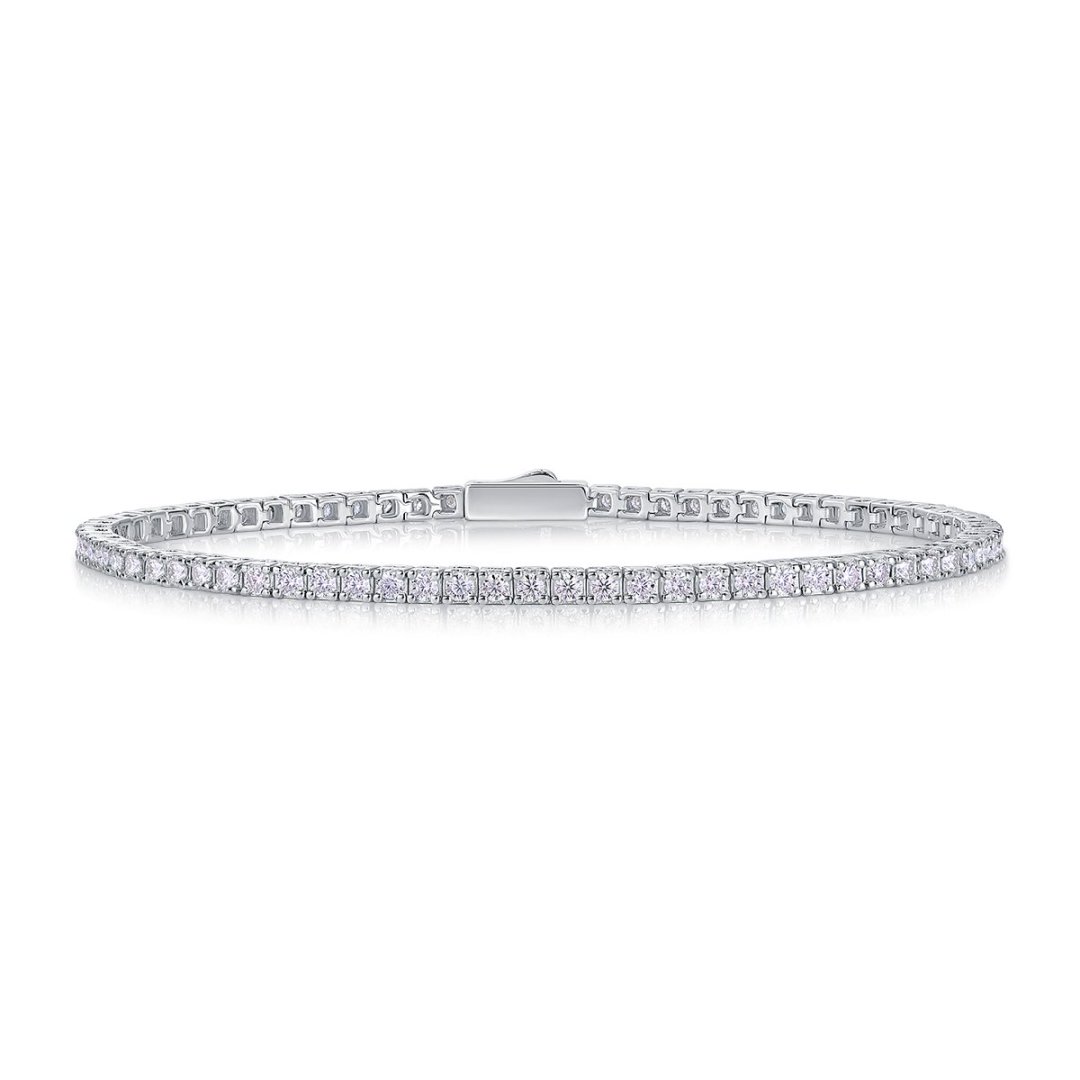
Look at the underside of your bracelet under good light. Between the stone settings you may see small joints that let the line follow the curve of your wrist. At the ends is a fastening system, sometimes with a secondary safety catch. Water can reach all of those places. Shampoo, conditioner and lotion can leave residue where a casual wipe across the top of the stones will never reach. A bracelet that looks hazy after a holiday may simply have a film on its surfaces. Appearance alone is a poor way to decide which treatment it needs.
Find the original description, especially if the piece was a gift. Look for the base metal, any plating and care instructions for the whole bracelet. A sterling silver description identifies the silver alloy. It does not tell you whether the surface is bare silver or has a decorative coating. The FTC’s guide to precious metal jewelry explains how to interpret common metal descriptions. Keep the receipt or listing with the care directions so you can check the exact finish before choosing a cleaner.
If the bracelet contains stones alongside moissanite, check what those are as well. An instruction suitable for one stone or one version of a design may not apply to a different version sold on the same product page. For a piece with an unknown construction or a previous repair, a photograph and the original item number give the retailer a useful starting point. Resist the urge to choose the strongest available treatment just because you cannot identify the residue.
A shower, a pool and the sea present different problems
In the shower, the most immediate concerns are soap residue and a slippery clasp. Removing the bracelet halfway through washing your hair introduces a new problem: you are now handling a small fastener with wet fingers above a drain. Make the decision before turning on the tap. Put the bracelet on a dry tray outside the splash zone and leave it there until you have finished drying off and applying any body lotion.
A pool introduces treated water as well as ladders, lane ropes and other hard surfaces. One awkward contact can matter more than the time spent in the water. GIA’s jewelry care guidance advises removing jewelry before swimming in chlorinated pools and keeping it away from household chemicals. Carrying a small case in your swimming bag helps only if you also have a secure place to leave it. On a busy pool day, putting the bracelet away at home is simpler.
At the beach, think through what would happen if you dropped the bracelet in ankle-deep water. A flexible line of small stones is hard to see under shifting sand. Sand can also collect between links. Rubbing it away with a beach towel presses the grains against the finish. For a day combining lunch, sun lotion and swimming, wear the bracelet to dinner afterward. You avoid having to find a clean, dry place to open a clasp with sandy hands.
| Setting | Main practical concern | When to remove the bracelet |
|---|---|---|
| Shower | Slippery clasp and product residue | Before turning on the tap |
| Pool or hot tub | Treated water and hard edges | Before entering the pool area |
| Beach | Sand and loss in moving water | Before leaving for the beach |
What to do after an accidental soak
Move away from the sink, tub or pool edge before undoing the clasp. Place the bracelet in a clean shallow dish or on a light-colored towel. Look for an open catch, a twisted section or a stone sitting at an unfamiliar angle. If something looks loose, leave the piece supported and ask a jeweler how to proceed. Pulling at an uncertain link to see whether it holds is a poor test on an item you hope to keep wearing.
For an intact bracelet whose care instructions allow a fresh-water rinse, use a clean bowl of lukewarm water to remove surface residue. If grit is visible, let the rinse carry loose particles away before bringing a cloth to the surface. Pat gently with a soft lint-free cloth, then lay the bracelet out to finish drying before closing it in a pouch. Keep it away from a hair dryer or radiator. For an unfamiliar finish or a piece with glued or mixed components, ask the maker for instructions first.
Once it is dry, examine the clasp over the towel. Operate it normally once and check whether each safety catch returns to its intended position. Let the line settle into a gentle curve and see if any section stays abruptly kinked. If a fastening no longer feels secure, set the bracelet aside and consult our guide to a loose tennis bracelet clasp. A catch that closes only with extra pressure deserves attention before the next outing.
Decide whether dullness calls for cleaning or inspection
Start with the location of the change. A cloudy patch across several stone faces after a shower suggests a different question from a narrow change of color along the edges of a clasp. Examine the piece first in diffuse daylight, then turn it gently. If the cloudiness moves with a reflected window, you may be looking at a reflection. If it remains in the same places after the maker’s recommended gentle cleaning, take a clear photograph for the retailer or jeweler.
With a plated bracelet, a change at the highest points of the links may relate to the finish. Avoid trying to polish those spots until they match the rest. An abrasive cloth or paste can take away more surface material precisely where you want to preserve it. Record where the change first appeared and how the bracelet was worn. That information is more useful at a repair counter than a list of several cleaners tried in quick succession.
Pay special attention to movement. A section that suddenly feels stiff after a beach visit may contain debris, but a joint can also be bent. Those are different problems and forcing the joint helps with neither. Leave the bracelet in the curve it accepts comfortably. A professional can inspect the joint and decide whether it needs cleaning, adjustment or repair. Pack it in a separate compartment for the trip so a second piece cannot press against the affected link.
Build a routine you will use away from home
A routine works when taking the bracelet off is easier than leaving it on. Choose a single dry location for it at home, away from the edge of the washbasin. When traveling, pack an individual lined case with enough room to lay the bracelet in a gentle curve. A shared pocket with a watch, a hair clip and a room key turns the bracelet into the softest landing place for everything else in the bag.
Consider a wedding weekend with a poolside brunch and an evening reception. Wearing the bracelet from breakfast onward means moving it from wrist to handbag to locker and back again. Leaving it secured with your evening outfit means handling it once when your hands are clean and dry. If you want a photograph in daylight, take it before the swim and put the piece away with your other valuables. This kind of planning protects a bracelet without making normal wear complicated.
Retailers can make that routine easier by answering the water question at the point of sale. For each of the bracelet styles you carry, record the finish, fastening type and maker’s cleaning instructions alongside the stock reference. Give the customer a specific answer for the purchased piece and a way to contact you if something changes. A short care card that accurately describes the bracelet in the box is worth more than a broad promise about every gemstone in the display.
Frequently asked questions
I forgot to take my bracelet off once. Should I replace it?
Start with an inspection after it is clean and dry according to its care instructions. Look at the surface, movement and fastening. If everything looks and works as before, there is no basis to declare the bracelet lost from that incident alone. Seek an assessment if a stone, link or clasp has changed position.
Can I wear it while washing my hands?
An occasional splash and an intentional soak are different exposures. Keep soap and lotion away from the bracelet where practical, and dry any splashes gently. If it tends to slide over your hand, take it off in a secure place before washing rather than balancing it on the rim of a public sink.
Will a safety chain make it suitable for swimming?
A safety chain can provide a second point of retention in some circumstances. It does not shield the metal from pool chemicals, keep grit out of joints or make a lost bracelet easier to retrieve. Treat it as part of the fastening system and leave the piece stored while you swim.
Can I use silver dip after a pool visit?
Check the instructions for the exact bracelet before choosing any chemical cleaner. A dip marketed for silver may be unsuitable for plating, mixed materials or decorative finishes. If a fresh rinse is permitted, start there. Have persistent discoloration assessed before trying products that could alter the surface.
How do I tell the jeweler what happened?
Describe the type of water, whether soap or another product was involved, what you did afterward and the exact change you noticed. Bring the purchase details if you have them. A photograph from before the incident can help the jeweler distinguish an original design detail from a recent change.
What if I need to remove the bracelet and have no case?
Move to a dry, secure spot first. If available, wrap the dry bracelet on its own in a clean soft cloth and place it in a closed compartment under your control. Avoid tissues that could be mistaken for trash. Transfer it to proper storage as soon as you can.