
A first wholesale moissanite ring order needs a quantity against each combination of style, finish and finger size. “Twenty-four rings in assorted sizes” leaves the most important buying decision to whoever packs the box. Start with the occasions your customers shop for, separate the pieces you need on the shelf from those you can order for a customer, and ask the supplier to confirm the quantities by size. A small, deliberate size run can tell you what to reorder. An undocumented assortment mostly tells you what happened to arrive.
Consider a boutique opening a counter with room for two ring designs. One is a slim solitaire customers can take home the same day. The other is a wider anniversary band customers usually try on before deciding. Both use moissanite and the same metal finish. Giving each design an identical spread of sizes would be easy, but it would ignore the way customers buy them. Here is how a buyer could build a first order and learn from the response.
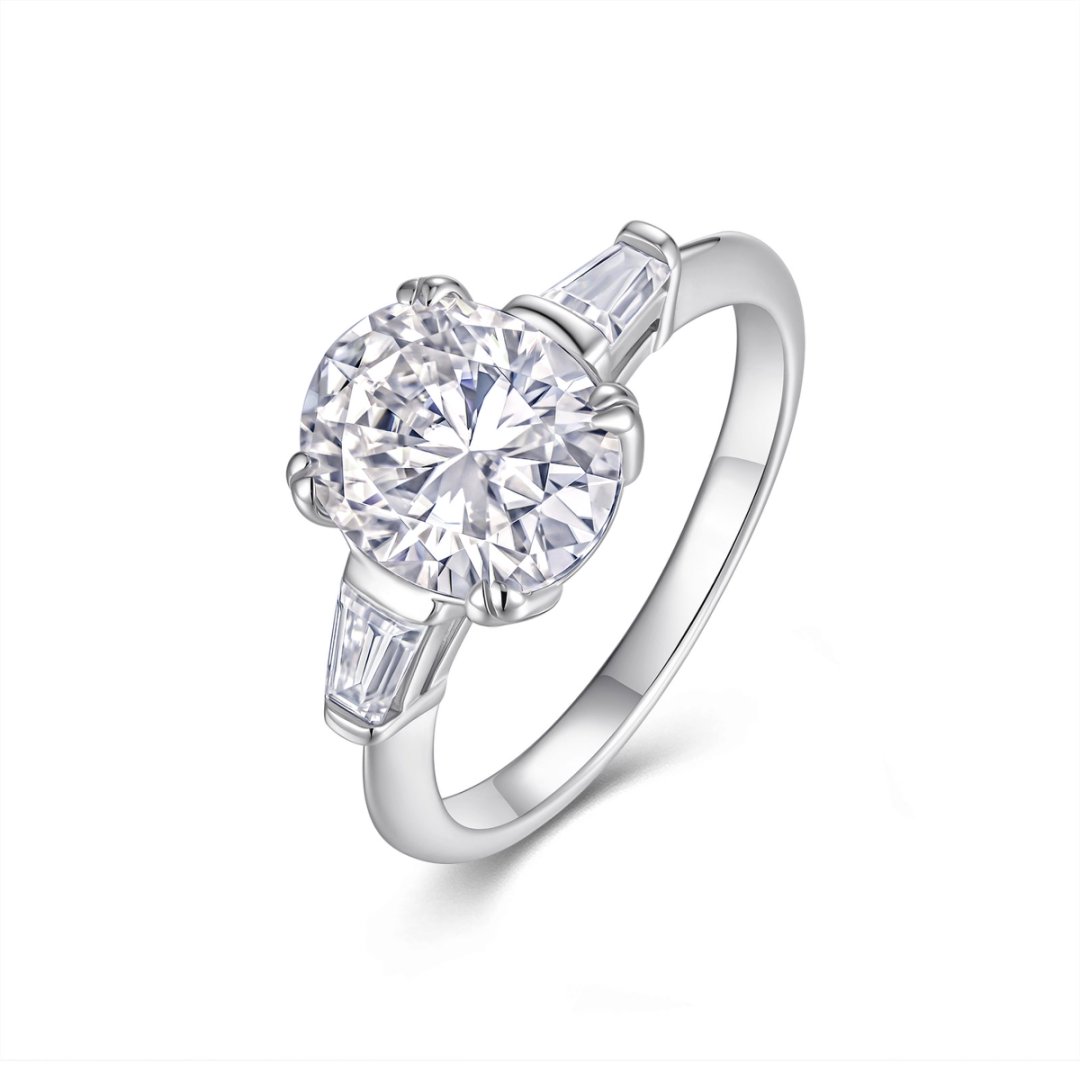
Give each style a job before buying sizes
Sit down with whoever will actually sell the rings. Ask them to describe the last few relevant conversations in the customer’s words. “I want something to wear to dinner tonight” calls for ready stock in the requested size. “Can my partner try the band before we order it in another finish?” may justify a fitting sample and a dependable special-order service. Record both. Otherwise a customer who is happy to wait looks exactly like one who walked out because the right size wasn’t on the tray.
Define what counts as an available size in your store. A boxed ring ready for collection, a display piece you are willing to sell, a fitting sample you need to keep, and a piece the supplier could make are four different promises. Give a staff member permission to sell the last display piece only if the business can afford an empty space until the replacement arrives. If a piece must stay, deduct it from sellable stock before calculating how many sales the first delivery can support.
Choose designs where the customer gets a meaningful choice. Two moissanite ring styles with clearly different profiles can teach you more than a tray of near-identical styles with one size apiece. Ask whether each style is comfortable to try in the available sample size. A single narrow solitaire cannot demonstrate the feel of a much wider band. For a customer between sizes, use the actual style or an appropriately wide sizing gauge before recording their final choice.
Build a size list from requests you can trace
If you already sell rings, pull the last run of comparable sales and identify the final size the customer kept. Exclude orders canceled before fulfillment. Record exchanges against the original order so that one shopper trying two sizes does not become two sales. Keep wedding bands, fashion rings worn on different fingers, and wide statement designs distinguishable. The observations may be few, but you want to know which customer question each observation can answer.
If the store is new, use appointments, requests from a launch event or a short period of collecting size-specific inquiries. Write down the style, the finger the person intends to wear it on if they volunteer that detail, and whether they tried the ring. A customer who liked a photograph and guessed a size is a weaker signal than one who tried the actual style and asked to reserve it. A dozen conversations will leave plenty of uncertainty. Retain a little purchasing capacity for the sizes that those first conversations missed.
Check which sizing system the supplier and your sales team are using. “Size 7” is an incomplete entry on an international order. Put “US finger size” at the top of the order column and ask the supplier to confirm its sizing reference for the finished ring. If a customer requests a half size, keep the half size in your records even if you carry only whole sizes on the shelf. Rounding every request as it comes in can make a persuasive report for stocking the wrong sizes.
A worked opening order for 24 rings
Suppose the boutique has already heard repeated requests for a slim solitaire in US 7 and 8 and has fewer observations for the wider band. It can buy 24 finished rings in one finish, including any sellable display stock. The supplier has confirmed mixed sizes are allowed for both styles. The table is a worked purchasing example. Its size distribution is invented to show the arithmetic and should be replaced with figures from your own counter.
| Design / US size | 5 | 6 | 7 | 8 | 9 | Total |
|---|---|---|---|---|---|---|
| Slim solitaire | 1 | 3 | 5 | 4 | 1 | 14 |
| Wide anniversary band | 1 | 2 | 4 | 2 | 1 | 10 |
| Opening stock | 2 | 5 | 9 | 6 | 2 | 24 |
The first style gets fourteen pieces and the second gets ten. Size 7 receives nine pieces across the order, but four of those are wide bands. A shopper who wants a solitaire cannot be counted as served by the four bands in the drawer. Keep the split visible on the order, on the receiving sheet and in the shop inventory. The row total is helpful for negotiating a style minimum. The individual cells are what staff need when a customer is waiting.
Now change one assumption. Suppose the owner decides that one size 7 in each style must remain as a permanent try-on sample. The invoice still shows twenty-four rings, but only twenty-two can be sold. The boutique can keep the original quantities and accept that limit, change the split before confirming the order, or price two dedicated samples separately. Putting a removable sample sticker on the box is useful. Recording its status in the stock system is what prevents a web order from consuming it overnight.
A size outside the table deserves a route to purchase. Check whether the supplier will make a single piece, at what price, and how long a confirmed order normally takes. Then staff can tell a customer what is available and when they expect to hear back. A blank cell in the first order means the shop has chosen to hold zero units at launch. It says very little about the underlying demand for that size.
Confirm the exact size run with the supplier
Send the matrix with a product reference and finish on each row, and request a written acknowledgment against each quantity. Ask whether minimum quantities apply by design, finish, individual size or total order. A supplier may accept fourteen rings of one design but require them in fixed packs. If the supplier offers a pack instead, ask for the enclosed quantities by size and compare them with the matrix before agreeing. A lower unit cost can leave the boutique with more pieces than it can realistically sell.
Clarify whether each size is physically in stock, available after sizing an existing ring, or made to order. Those options can have different dispatch dates and service terms. For a trade example, Stuller’s ordering FAQ distinguishes an orderable backordered product from stock on hand and describes how configuration can include finger sizing. Your own supplier should confirm its terms for the specific design. Ask what happens if thirteen rings are ready and the fourteenth is delayed, including whether a split shipment adds freight.
Write a single instruction on substitutions. For example, “If a size is unavailable, hold that line and send the revised availability before shipping. Please identify any proposed substitute by style, finish, size and quantity.” Put the latest agreed version on the purchase order. If you offer engraving, obtain a separate confirmation of whether it affects lead time or returns. Before relying on a local bench adjustment for a missing size, review the ring construction with your jeweler. Our ring resizing guide covers the questions to ask about the band and setting.
Receive by size and reorder from what customers kept
Open the boxes against the approved matrix. Check the style, finish and labeled size, then check the finished fit against the agreed reference. Keep a disputed piece separate until the supplier and buyer agree on the discrepancy. Posting a size 8 into the system while its box contains a size 7 creates two problems at once. The shop may send the wrong ring to someone who ordered an 8, and its next stock report may suggest purchasing another 7 that was already there.
Set a review date before the first pieces sell. At that review, pull opening sellable units, receipts, units customers kept, exchanges, current sellable units and open customer commitments. Log specific missed requests separately. Imagine that both size 6 wide bands sold on opening weekend and three more customers asked to try one the following week. Two sales describe completed business. The three requests tell you the empty tray may have limited what you could observe. Check whether those visitors accepted a special order before treating their requests as additional lost purchases.
A simple reorder calculation is worth writing out. If the buyer wants four sellable units available at the next delivery, expects to sell two more before it arrives, has three sellable units now and has one confirmed inbound unit, the proposed order is two units: four plus two, less three, less one. Count committed units consistently. If you have already deducted reservations from sellable stock, do not deduct them again. Round the order to a pack quantity only after seeing the difference in both cost and projected stock.
Frequently asked questions
What ring sizes should a new boutique buy first?
Begin with measured requests for the actual styles and customer groups you plan to serve. If you have little evidence, make a small opening commitment and confirm special-order terms for sizes you cannot carry. A universal list of popular sizes cannot account for the fingers, band widths or buying occasions in your shop.
Should we buy half sizes in the first order?
Stock a half size when fitting sessions or final purchases give you a reason to expect repeat demand and the replenishment terms support it. Otherwise record the request exactly and check whether you can offer that size by special order. Tell the customer the expected timing before accepting the order.
How do we record a ring exchanged for another size?
Record the original transaction and link the exchange to it. Restore the returned unit to sellable inventory only after inspection. For the planning report, count the size the customer kept as the completed sale. Keep the original selection as a separate fit observation that may help staff advise the next shopper.
Can one display ring cover several finishes?
It can demonstrate the physical fit if the supplier confirms that the construction and dimensions match. The customer may still want to see the actual finish. Label the sample accurately and make clear which features the customer has tried in person and which will be supplied to order.
What if a supplier’s minimum exceeds our planned quantity?
Request a quote for a smaller mixed-size run, ask whether a different ready-stock style has more flexible terms, or delay the design until demand supports it. Compare the full cash commitment and likely unsold sizes. A modest surcharge on a small order may cost less than a drawer of spare rings.
When is it time to add a third design?
Consider adding one when you can identify an unmet request that neither existing style serves and still fund replenishment of the sizes people are buying. Check whether sales were limited by design choice or by empty size slots. The answer determines whether the next purchase should broaden the tray or refill it.