
One supplier quotes forty dollars for a necklace sample. Another quotes eighty dollars and promises a credit on the first production order. Which sample costs less? If you never place the order, the answer is fairly simple once freight is included. If you go ahead with production, the answer depends on what the credit actually covers and whether the order you intend to place qualifies.
For a small jewelry business, this is a buying decision in two stages. First you pay to learn something about a piece. Only after examining it do you decide whether the product earns a place in your assortment. Keep those decisions separate on paper and the sample fee becomes much easier to evaluate. The figures below are illustrative buying examples, independent of any particular supplier’s terms.
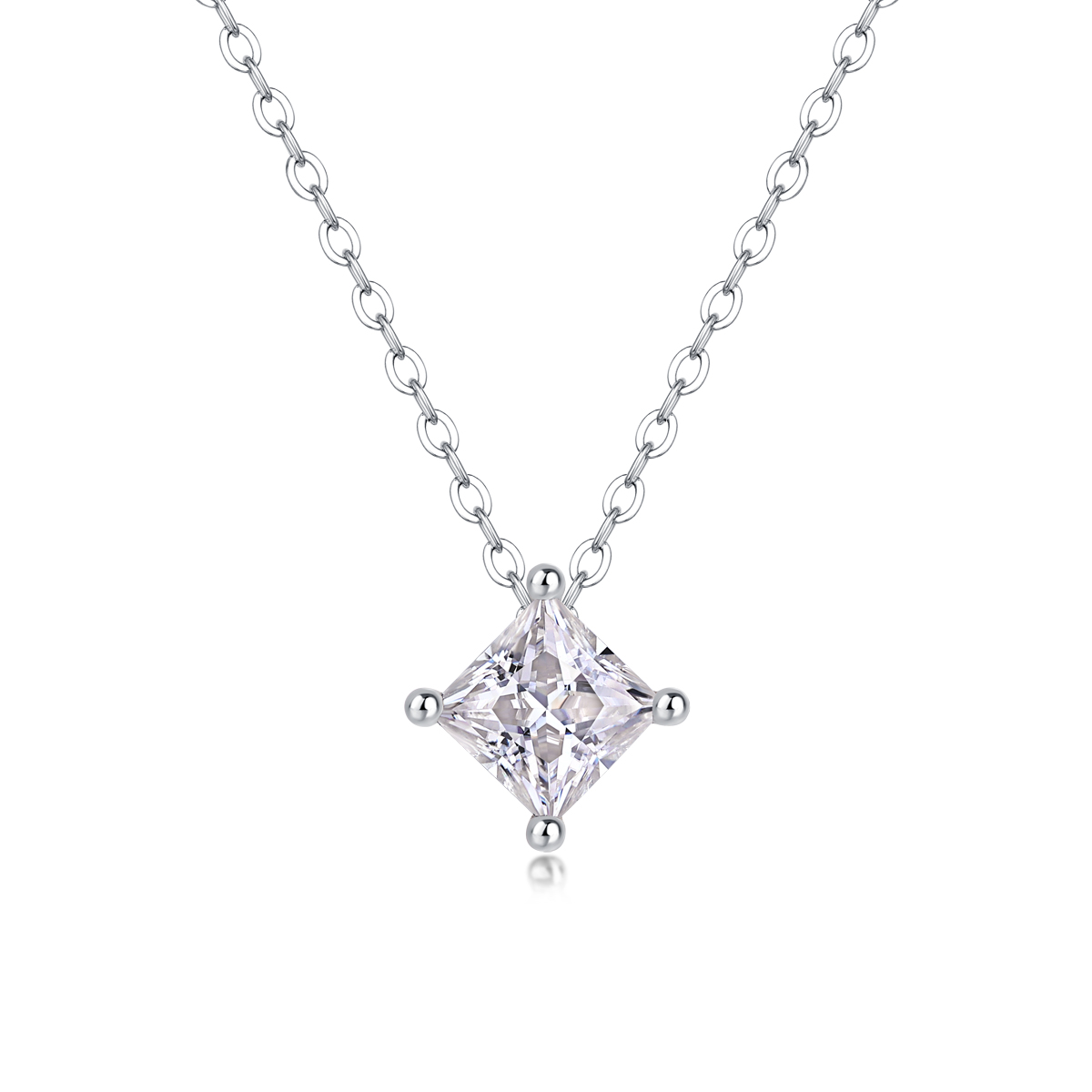
Define the question the sample must answer
Start with the item and the decision you need to make about it. A stock sample of a sterling silver pendant may let you inspect its scale, the movement of its bail and the finish on the reverse. If you plan to order a different chain length or a personalized version, that same sample may tell you little about the finished proportions or the legibility of a small engraving. Write a sentence naming what you expect to approve and what will still need to be checked.
Next specify the sample itself. Include the style number, metal, finish, stone dimensions, chain specification and any packaging you need to assess. If an existing piece will be supplied as a reference, ask which details differ from the proposed merchandise. For instance, a bright silver reference can show the size of a pendant, but it cannot establish the shade of a gold-tone finish. Agree on what the sample represents before comparing prices for it.
If you are shortlisting several wholesale necklace styles, prioritize the questions that a physical sample can settle. Seeing a clasp at actual size may change your choice immediately. A box logo position might be resolved with a dimensioned artwork proof first. You may still want the finished box later, but you can avoid paying to ship the wrong design twice.
Break the invoice into separate amounts
Ask the supplier to separate the price of the sample piece, development or setup work, packaging and freight. If a payment charge or other amount applies, record it separately too. The total tells you how much cash goes out today. The lines tell you what could be repeated if the sample changes. A stock pendant plus an engraved tag may have one physical unit price and a separate setup amount even though the two arrive in one package.
Next to each line, put one of three descriptions in your own worksheet: eligible for credit, excluded, or awaiting confirmation. A statement that the sample is refundable can mean several things. The supplier may deduct its unit price from a qualifying invoice, return it after receiving the physical piece or apply a fixed allowance to a future purchase. Those outcomes differ in timing, cash flow and the conditions you must meet. Request the mechanism and the amount in writing.
Check whether the quote is per item or per shipment. Ordering three stock pieces together may let them share one freight charge, while each style retains its own eligibility threshold. Conversely, a supplier might quote a single development fee for several variations and make only one credit available. A comparison built from three copies of a one-piece total will be unreliable in either situation.
Work through a small order in numbers
Suppose offer A lists a sample at $40 and freight at $20. The supplier offers no later credit. Your sample-stage cash outlay is $60. Offer B lists a sample at $80 and freight at $20, with an $80 credit if you order at least 100 units of the approved style within the stated window. Your initial outlay under B is $100. Freight remains an expense in both cases.
If you inspect the necklace and reject it, you have spent $60 with A or $100 with B. That is the useful downside comparison. If you order 100 eligible pieces on time and the full $80 credit appears on the invoice, the sample-stage cost remaining after credit is $20 with B. To complete the buying decision, compare the production prices too. A credit can be fully honored and still leave the more expensive total purchase.
For example, at a hypothetical production price of $12 per unit with A and $12.60 with B, 100 pieces cost $1,200 and $1,260 respectively before credits. Add each sample-stage outlay and subtract the applicable credit once. A totals $1,260. B totals $1,280. These figures assume equal production freight and exclude other charges common to both offers. The $80 allowance narrows the difference, but the extra sixty cents across 100 units still matters.
| Expense | Offer A | Offer B |
|---|---|---|
| Sample and sample freight | $60 | $100 |
| Production before credit | $1,200 | $1,260 |
| Credit applied | $0 | −$80 |
| Total before production freight | $1,260 | $1,280 |
Now change only your planned quantity to 60 pieces. If B still accepts the order but its credit threshold stays at 100, set the credit to zero when comparing those 60 pieces. If B requires 100 units for production itself, it is a different purchasing proposition altogether. A threshold for receiving a credit and a minimum quantity for placing an order deserve separate lines in your notes.
Pin down which order earns the credit
Ask whether the threshold applies to a style, a variation, a purchase order or your account over time. Imagine ordering fifty silver-tone necklaces and fifty gold-tone necklaces built around the same pendant. You may consider that one hundred units of one design. The supplier may see two finishes with separate setups and separate thresholds. Ask the question using the exact mix you are likely to buy and keep the answer alongside the quotation.
Clarify the dates with the same precision. A credit available for sixty days could start on the payment date, dispatch date, receipt date or approval date. The qualifying event at the other end could be a signed order, deposit received or full payment. If you plan to photograph the sample, present it to retailers and gather commitments before ordering, these differences can decide whether you qualify. Get the calendar date or a plainly stated start and end event.
Finally, establish how the allowance appears. Is it deducted from a deposit, shown as a line on the balance invoice or retained on account for a later order? Can an unused portion carry forward? If the buyer name on the sample invoice differs from the name on the production order, ask whether the credit follows. This matters for small brands that pay for an early sample personally and order through the business later.
Agree what happens if a revision is needed
Suppose a necklace arrives with the correct pendant but the wrong chain length. Compare it with the specification that accompanied your payment. If the written reference is clear, photograph the piece against a scale and describe the discrepancy in one line. Ask the supplier how the replacement, shipping and original sample credit will be handled. Keep all three questions visible. A replacement piece at no charge does not automatically settle a second freight bill or extend a credit deadline.
A change requested after seeing a conforming sample is a different discussion. Perhaps the pendant measures exactly as ordered but looks too small beside the chain you chose. Request the revised dimensions and an itemized revision quote before authorizing a second sample. Confirm which sample becomes the production reference and whether either fee remains eligible. Otherwise two individually sensible approvals can leave your buyer and the supplier working from different versions.
For a piece with several custom elements, approve decisions in an order that limits wasted work. Confirm placement and spelling before a metal part is engraved. Check pendant and bail dimensions before choosing a chain end that must pass through the opening. Each approval should identify what is being approved, by whom and against which dated drawing or sample. These short records become valuable when you come back a month later to place the order.
Close the loop on the first invoice
When the production quote arrives, open the approved sample record before paying. Match the item number, finish, quantity and revision. Then locate the credit as a specific amount on the production paperwork or request a written statement of when it will be applied. Compare the revised amount payable with your own calculation. If the supplier has already deducted the credit from the unit prices, avoid subtracting it a second time in your buying sheet.
A concise inquiry can carry all the essentials: “Please quote one sample of the specified pendant and chain, with sample price, setup and shipping shown separately. Our likely opening order is 60 pieces in each of two finishes. Please confirm the credit amount for that mix, the deadline and the invoice on which the deduction appears.” Add your actual delivery destination and any detail that changes the shipping calculation. This gives the supplier a realistic order to price.
After the transaction, keep the sample invoice, approved specification, credit agreement and production invoice together. Mark what was actually recovered and when. On the next sourcing round, this simple record helps distinguish a supplier who quoted a generous conditional credit from one whose terms consistently match the way your business buys. The best arrangement leaves you free to reject a weak sample and gives you a clear total if the piece deserves an order.
Frequently asked questions
Is a sample credit the same as a cash refund?
A credit usually reduces an amount due on an eligible purchase. A cash refund returns money through an agreed method. Ask which applies, whether the physical sample must be returned and who pays any return freight.
Should I count freight in my sample budget?
Yes. Include the freight you expect to pay in your initial cash requirement and show it as a separate line. Only treat it as recoverable if the supplier explicitly includes it in the allowance.
Do gold-tone and silver-tone versions count together?
That depends on the quoted terms. Tell the supplier how many of each finish you plan to buy and ask for the exact credit for that combination. Keep the answer with the style specification.
What if I am comparing different currencies?
Record the quoted currency and the exchange rate you use on the comparison date. If payment is later, check the actual amount charged and any conversion costs before treating the estimate as your final expense.
Should I order extra units just to earn the credit?
Calculate the cash required for the extra units and consider whether you can sell them on your normal timeline. A credit that saves money on the invoice can still leave you with more inventory than the initial order warrants.
What should I keep after approving the sample?
Keep a marked photo or the physical reference, the agreed specification, the sample invoice and the written credit conditions. When the first production invoice arrives, match all four to the goods and the deduction being billed.