
A buyer opens a beautiful bracelet box and finds the clasp sitting directly under the lid. The bracelet fits, in the sense that the lid closes. It also takes two hands and a tug on the last link to lift the piece out. On the first sample this is a minor annoyance. Across a delivery of individually boxed bracelets it becomes a receiving, merchandising and repacking problem. Packaging approval is the moment to catch it.
For a wholesale moissanite tennis bracelet, ask the supplier to pack an actual sample of the ordered style in the proposed insert, close the box, and show how the bracelet comes out. Start there before approving a foil color or the position of a logo. A useful specification describes the bracelet, the job the packaging must do, what counts as an acceptable packed unit, and who approves a change. Here is how to put those details on one working brief.
Decide who opens each layer
Trace one piece from the supplier’s packing table to the customer’s hand. In a boutique order, the receiving team might open a bulk carton, transfer most pieces to a display tray, and use gift boxes only when customers buy. In an online order, the individual presentation box might travel inside a separate shipping package all the way to the customer. These two routes can use the same bracelet and require very different packaging. Decide which route the quote covers before comparing unit prices.
For example, a store ordering sixty bracelets for a counter display might want individually identified stock sleeves and twenty presentation boxes supplied flat or separately. A web retailer ordering the same sixty pieces might want sixty complete, ready-to-pick units with the correct barcode visible on each outer sleeve. Write the quantities against each component. “Gift box included” leaves open whether someone at your warehouse must match a loose box to each bracelet and whether the box itself can be identified while closed.
Give the packer the dimensions that matter
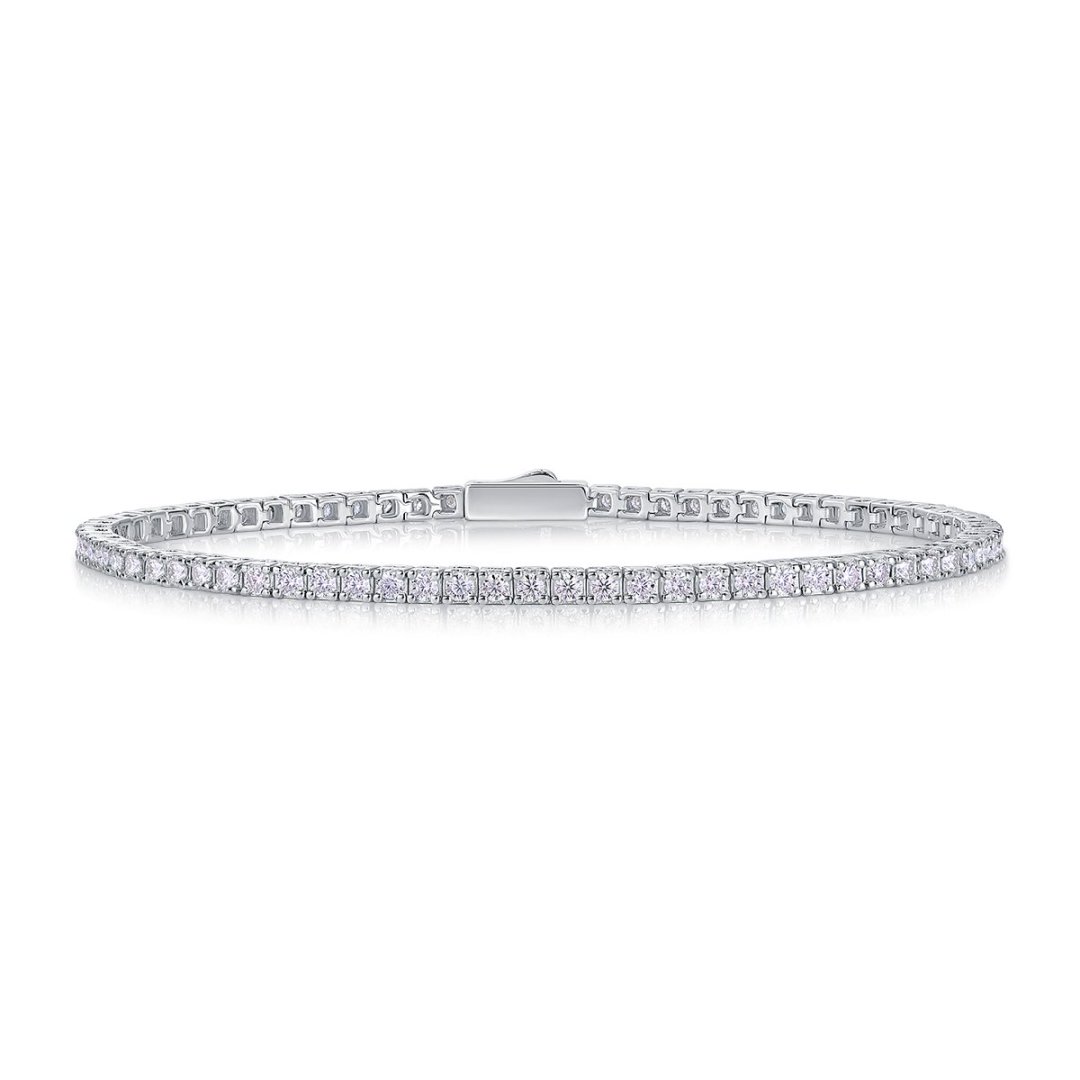
Supply the finished bracelet length, face width and clasp outline. Include a photograph of the clasp closed and another showing any side catches. If the ordered range includes several lengths, identify the shortest and longest variants. The straight length tells the packer how much bracelet must be accommodated. The way the links articulate determines whether the proposed curve feels natural on the insert. A photograph of an empty insert cannot settle that second question. Ask to see the actual piece lying in position.
State which part may be held by a tab or elastic loop. A retaining point that looks discreet in a front photograph may sit across a raised catch or obscure the very setting you want the customer to see first. On the approval photograph, mark the intended clasp location and both retention points. If the bracelet has to be forced into a tight bend to make the layout look symmetrical, try a longer insert or a different presentation before signing off.
Check the extremes separately. If a six-and-a-half-inch sample lies neatly on a pad and the longest size forms a second loop at the bottom, the longer version needs its own arrangement. Conversely, an insert that holds a long bracelet at both ends may leave the short size hanging from one fixing. Use actual lengths from your purchase order. The dimensions here illustrate what to test and do not prescribe a standard box size for every bracelet.
Compare inserts by handling them
| Insert option | What to test with a bracelet | Reason to revise |
|---|---|---|
| Flat pad with tabs | Release each tab with the piece supported | Tab bears on a side catch |
| Long channel | Lift the bracelet out at its clasp end | Receiver has to pull the last link |
| Curved cushion | Close the lid with the longest size in place | Clasp sits high or links overlap |
Have a person who did not design the pack open it without coaching. Watch where their hands go first. If they reach under a stone with a fingernail because there is nowhere else to lift, add a ribbon under the pad or change access to the retaining tab. If instructions are necessary for the stockroom, one annotated photo on the packing sheet can be enough. A customer opening a gift should be able to lift the bracelet without needing that sheet.
Leave the packed sample closed for the agreed trial period. Reopen it and look for displaced links, visible impressions on the pad, loose fibers caught around the settings, or color transferred to a light surface. Record what you actually see and ask for a revised sample when needed. A short sample trial supports a decision about that pack under those conditions. Avoid turning it into an unsupported promise about long-term storage, tarnish protection or what every parcel will withstand in transit.
Write a label your receiving team can use
Ask the person booking goods into stock what they need to see without opening the box. For a bracelet offered in two finishes and three lengths, a style name alone describes six different variants. Put the variant identifier, length with unit and finish on the agreed stock label. If you use a barcode, supply the approved artwork or data and scan a printed sample with the equipment your receiving team actually uses. Keep the customer-facing name consistent with the selling page.
Specify placement with a photo. “Bottom right” changes meaning when a sleeve slides off sideways. Place the closed pack in its picking orientation, photograph it, and draw a rectangle around the label location. Decide whether the retail box should stay unmarked once the stock sleeve is removed. A boutique may want the gift recipient to see only the presentation box. A fulfillment team may need a second identifier inside so an opened return can be matched to a variant. Resolve both needs on the sample.
When several lengths look alike, create a simple deliberate mismatch during the approval meeting. Put a sample beside a sleeve labeled for the other length and ask the receiver how they would catch the error. If the only answer is to trust the sleeve, add an independent check while the pieces are still on the packing table. That might be matching a tagged piece to the order line before the sleeve goes on. Agree who records discrepancies and where the affected pieces wait for review.
Run a pack trial from both ends
Have the supplier assemble one unit exactly as planned, including the tissue, care card, stock label and protective outer layer. Ask for a continuous short video of packing it. Then have your own receiver unpack the delivered sample in reverse. Note which actions take extra time, which components are discarded immediately, and which details must remain pristine for resale. A thick card that looks attractive next to an open box can create pressure if it is placed over a raised clasp under a shallow lid.
Run a small trial shipment using the intended outer packaging and a representative mix when practical. Photograph the packed arrangement before departure and the state on receipt. If a box has moved, compare the location of the damage with the position of spacers and the direction the lid opens. Change a single feature and repeat the relevant part of the trial. Record the outcome against a dated sample so the bulk packing team has something specific to reproduce.
Define acceptance in observable language. For example, the lid closes completely without someone pressing it over the clasp; the bracelet stays in the photographed orientation during the agreed handling check; the receiver can release the bracelet by the designated tab; the label scans to the intended length and finish. If two people can look at the same sample and reasonably disagree about whether it passes, improve the wording or add a reference photo. Agree separately on how many production units to inspect.
A packaging request you can send with an inquiry
Here is an illustrative brief for a mixed-length order. Replace the quantities, measurements and identifiers with your own. “Please quote individual packaging for sixty moissanite tennis bracelets, twenty each in three lengths. We will send the variant list and artwork. Quote the box, fitted insert, removable labeled sleeve, packing labor and outer carton separately where possible. Please identify any one-time artwork or setup charge and the minimum quantity for a repeat print run.”
Continue with the approval conditions. “Before bulk packing, send photos of the shortest and longest bracelets in the proposed insert, including a side view at the clasp. Show one closed and reopened pack, and provide a printed stock label we can test. Please identify each material or component that may be substituted. Obtain our written approval for a different insert, label position or box depth. List the sample cost and the time needed after artwork and pack approval.” A supplier can now quote against actual decisions.
For a reorder, attach the accepted sample photos and ask whether the same components are still available. Keep a reference unit at receiving if space allows. If the original pad is discontinued, check the replacement against the bracelet again even if the box dimensions match. A change in the depth of a slot can change where the clasp sits. The purchasing reference should identify the approved combination of box, pad, label and bracelet variant, alongside the date it was agreed.
Compare quotes at the quantity you can use
Suppose one supplier offers a printed sleeve only in runs of five hundred, while you need sixty packed units. Ask who owns the remaining sleeves, how they will be stored, and what happens if your artwork changes. Another supplier might offer an unprinted sleeve with a separately applied label for the initial run. Compare the cash outlay for this order, the labor at your end and the cost of a likely reorder. Keep assumed future orders separate from the sixty units you actually need now.
Check the packed carton dimensions and gross weight before finalizing a freight comparison. A presentation box can change how many units fit in a carton. Ask whether boxes arrive nested, flat or fully assembled, and whether freight figures cover the same route and service. Once you have a shortlist of bracelet styles, put one packaging line beside each variant on the order. That simple step makes it much harder to approve a beautiful box for the wrong piece.
Frequently asked questions
Can one box work for several bracelet lengths?
Yes, if the insert holds both ends of the size range without compressing the clasp or leaving loose links piled up. Ask for the shortest and longest samples in the same box. Where a different insert solves the problem, assign it a separate reference even if both versions use identical outer packaging.
Should the clasp be open or closed inside the box?
Agree on the position after trying the specific bracelet and insert together. Check how the links lie and whether a retaining tab pushes on the opening mechanism. Photograph the accepted position from above and from the side. Use the same pictures for packing and receiving so both teams judge the same arrangement.
What if the supplier offers an anti-tarnish insert?
Ask what material is supplied, what evidence supports the claim and which conditions apply. Decide whether the feature belongs in your specification and whether you have enough support to repeat the claim on a customer-facing card. You can approve an insert for fit and appearance while requesting separate documentation for its protective properties.
Do I need a custom printed box for a small trial order?
A stock box with a fitted insert and a removable branded sleeve can give you a practical first run. Price it alongside a custom printed option and compare the minimum order, setup charge and time to reorder. Spend the first sample budget on the parts that hold and release the bracelet correctly.
How do I record a failed packaging sample?
Photograph the defect in the position where it appeared. Identify the bracelet variant, packaging revision and action that exposed the problem. Write a concrete correction, such as moving the retaining loop clear of the side catch. Ask for the same angle on the revised sample so the receiver can verify the change.
Which documents should travel with the final purchase order?
Include the component list, variant and label map, approved artwork revision, dated pack photos and quantities for each packaging format. Name the person who can approve substitutions and identify the evidence needed before packing starts. Keep a copy with the receiving team so the person opening the first carton knows exactly what was ordered.