
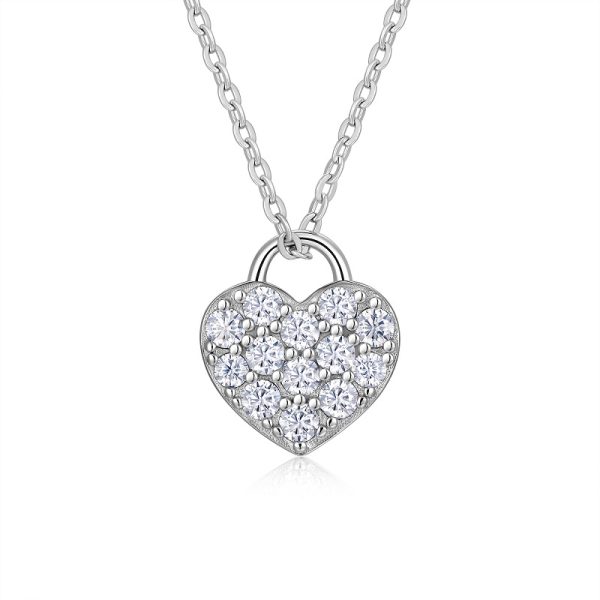
Choose a 16-inch necklace if you want it to sit higher on the neck. Choose an 18-inch necklace if you prefer a lower, looser drape or need more room for a pendant. Your neck circumference, the chain’s construction, and the size of the pendant all affect where the finished piece sits. The easiest way to decide is to try both lengths with the clothes you plan to wear.
Where each length sits
A 16-inch chain measures about 40.6 cm and an 18-inch chain about 45.7 cm. The two-inch difference is the extra length around the full loop. The pendant does not move straight down by the full two inches. Its final position depends on how the chain drapes around your neck and shoulders.
| Length | How it typically wears | When to try it first |
|---|---|---|
| 16 inches | Higher, often around the base of the neck or collarbone | A short layer, a small pendant, or a necklace you want to keep above an open neckline |
| 18 inches | Lower, often near or below the collarbone | A pendant with a longer drop, a more relaxed fit, or the lower piece in a two-chain stack |
These positions are approximate. Someone with a larger neck circumference may find that a 16-inch necklace sits high, while it can drape loosely on someone with a smaller neck circumference. A wide or relatively stiff chain can also sit differently from a thin cable chain at the same listed length. If fit matters for a gift or a design with a substantial pendant, measure a necklace that already fits well.
How to try both lengths at home
- Cut two pieces of flexible cord, one 16 inches long and one 18 inches long.
- Bring the ends together at the back of your neck. Stand naturally and look at the center of the loop in a mirror.
- Mark the point where you want the pendant or center stones to sit. Try each cord again while wearing the shirt or dress you plan to pair with the necklace.
- If you already own a similar necklace, lay it flat and measure from the end of the clasp to the ring it attaches to. Record which attachment point you use if it has an extender.
For a pendant necklace, the bottom edge of the pendant hangs below the chain. Compare the full drop, including the bail or connector, with the space you have above the neckline. Tiffany & Co.’s size guide also describes using a string to preview fit and checking the pendant’s size before layering. See the necklace sizing guide.
Choose for a pendant, neckline, or stack
For a moissanite pendant
Try the 16-inch length if you want a small pendant close to the collarbone. Try 18 inches if you want the design to sit lower or if the shorter chain feels snug. A longer pendant can still sit high enough for a particular neckline if you use a shorter chain. Measure both the loop and the pendant drop before deciding. Compare Cristiera’s moissanite necklaces for examples of pendants and chains with different proportions.
For a tennis necklace
Compare necklaces that use a similar stone size and setting. A continuous row of stones draws attention across the neckline, and the way its links bend affects how the row follows the neck. Ask for an on-body photograph at the listed length if you are ordering online. A picture on a flat surface shows the stone pattern but gives little information about how the necklace sits.
For layering or matching a neckline
Start with 16 inches for the upper layer and 18 inches for the lower layer. Check the gap between the pieces after adding both pendants. If the upper pendant touches the lower chain, try a shorter pendant or a longer lower chain. For a V-neck, see whether the chain fits inside the opening. With a crew neck, check whether it sits clearly above the fabric or rests on top of it. A chain that falls directly on the seam can move in and out of view as you walk.
What retailers should measure
If you sell both sizes, show both lengths on the same model and keep camera angle, pendant, and neckline consistent. Record the model’s neck circumference if they agree to share it. Label a photo with the length actually worn and identify the clasp position for adjustable styles. A product listing that says “16 inches plus a 2-inch extender” gives customers more information than one that describes the necklace as 18 inches without explaining how it adjusts.
When ordering samples, ask the supplier how the base length is measured and which extender positions are usable. Check the length with the clasp fastened at the shortest and longest positions. Photograph the pendant against a ruler and record its drop separately. Include these measurements in the product specification so the sample, production order, and online listing use the same terms.
Frequently asked questions
Is a 16-inch necklace always a choker?
Fit depends on the wearer and the chain. On some people a 16-inch chain sits close to the neck. On others it falls nearer the collarbone.
Is 18 inches a better gift length?
It offers more room than 16 inches for the same chain design. If possible, measure a necklace the recipient already wears or choose an adjustable style with clearly stated clasp positions.
Does an 18-inch necklace include the pendant?
Listings commonly state the chain length separately. Check the seller’s measurements for the pendant drop and whether the extender is included in the stated length.
Can I wear 16- and 18-inch necklaces together?
Yes. Try both at once and check that the upper pendant clears the lower chain. If they overlap, increase the gap or choose a smaller pendant for the upper layer.